
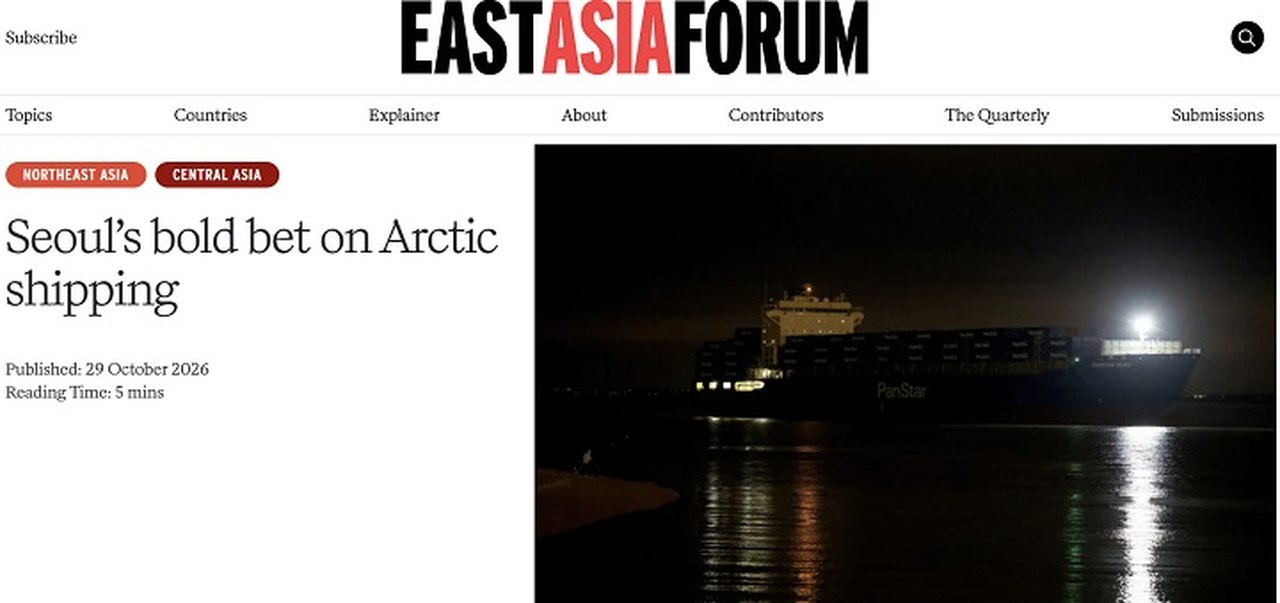
[Diary Point = Reporter Eom Ju-yong] The South Korean container ship Panstar Arco has set a national first by completing a round-trip voyage to Europe via the Arctic route. The vessel departed Busan Port on August 22, called at Felixstowe in the UK, Rotterdam in the Netherlands, and Gdansk in Poland, before returning to Busan on October 11. It marks the first case of a container ship carrying actual export cargo making a round trip through the Arctic Ocean.
The biggest reason this voyage is drawing attention is distance and time. Using the Northeast Passage, the trip from Busan to Rotterdam covers roughly 13,000km — about 7,000km shorter than the roughly 20,000km route via the Suez Canal. Data from Korea's Ministry of Oceans and Fisheries and related analyses also indicate the voyage takes about 10 days less than the conventional route.
A shorter route doesn't automatically mean cheaper shipping
A shorter route creates room to cut both sailing time and fuel consumption. For time-sensitive cargo bound for Europe, such as auto parts or chemical products, shorter inventory-holding periods could help supply chain management. It also means shippers would have an additional backup route to turn to when conflicts in the Middle East or disruptions to the Suez Canal occur.
However, this single successful round trip doesn't mean ocean freight rates or shipping fees will drop right away. The Arctic route requires additional costs such as icebreaker support, ice-class vessels, polar navigation expertise, and extra insurance. Sailing windows are limited by ice conditions and weather, and administrative and financial variables tied to passage along the Russian coast and international politics remain. The government plans to separately analyze not just sailing distance but actual fuel consumption and operating costs.
Busan Port enters the race for transshipment and port services
Once a regular shipping line is established, the effects are likely to show up first in ports and businesses rather than consumers. Busan Port could function not just as a port handling Korean cargo, but as a departure and transshipment hub for ships using the Arctic route. The Ministry of Oceans and Fisheries is working to develop Busan Port as a container logistics hub and Ulsan Port as an energy logistics hub, while also preparing polar-certified mariners and ice-class container ship technology.
Competition among ports could shift as well. If Busan grows into a hub where cargo is consolidated before heading to Europe, transshipment volumes and related industries — ship maintenance, fuel supply, insurance and finance — could cluster around Busan and the southeastern region. On the other hand, competition with Chinese and Japanese ports also eyeing the Arctic route is likely to intensify, and without securing stable cargo volumes, the route could remain a pilot project rather than a commercial success.
Consumers will feel the change only after a regular route is established
At this stage, consumers can't yet choose the Arctic route for online orders or shorten their own delivery times. Changes in procurement times, inventory burdens, and some prices for European cars, parts, and manufactured goods would only emerge once a regular shipping line operates and cost savings are reflected in ocean freight rates and import costs. Even then, final prices are also shaped by exchange rates, oil prices, tariffs, and inland transport costs.
Based on data from this pilot voyage, the government is preparing follow-up and commercial voyages and is pushing to launch a regular Arctic shipping line by 2030. The route's real economic viability will depend on further verification of the navigable season in the Arctic, icebreaker support costs, international conditions, and whether sufficient cargo volume can be secured.