
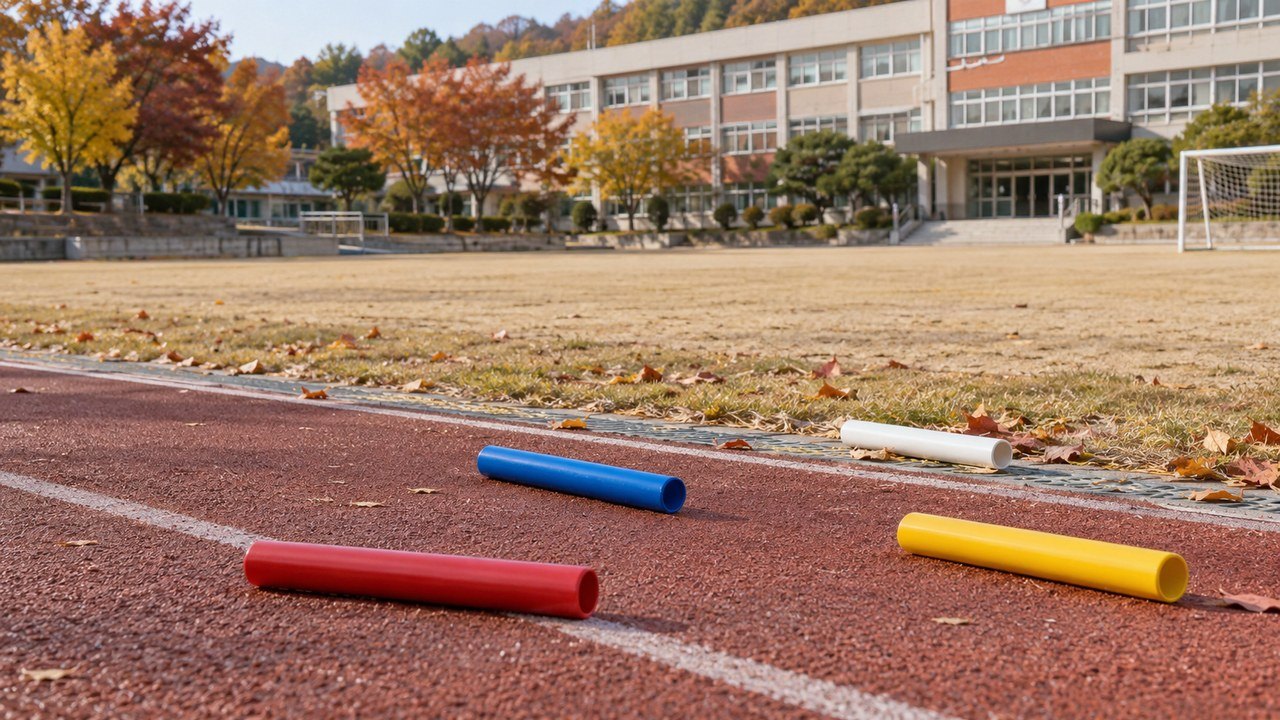
[Diary Point = Reporter Choi Seung-jin] A report on Nov. 2 about a parent complaint that allegedly led an elementary school to cancel a relay race sparked debate online. In a video posted to social media, a child said students had been selected for the race and had practiced before it was called off. The school’s name, the complaint and the circumstances behind the decision have not been disclosed, so the video alone does not establish all the facts.
The story drew attention amid other complaints and restrictions involving schoolyard activities. Recent reports citing data from the Seoul and Busan education offices said that, as of May 2026, 12.4% of elementary schools in Seoul and 34.7% in Busan restricted physical activity in their schoolyards. These figures describe schools in those two regions; they are not nationwide rates. Noise complaints from nearby residents were among the reasons cited for restrictions.
Noise complaints about school sports days have also increased. A report citing National Police Agency data released to the National Assembly said police received 70 emergency calls about such events in 2018 and 350 in 2025. Officers responded to 345 of the 2025 calls. The call counts and the school activity figures cover different populations and use different criteria, so they should not be combined as if they were one statistic.
The figures show regional patterns in restrictions
The numbers do not mean that every school restricted activities for the same reason. The scope of restrictions, the hours and events covered, and the safety measures in place can vary by school. In the relay race case, no information has been made public to show whether one complaint alone prompted the decision or what safety review the school conducted. Online criticism should be considered separately from the school’s decision, which has not been independently detailed.
When safety concerns arise, a school can review the running route and surface, then consider events and procedures suited to students’ abilities. The school hosting an event is responsible for participant safety and plans for responding to accidents. At the same time, South Korea’s School Sports Promotion Act says school principals should take steps to improve students’ physical fitness and encourage sports activities. The law does not require schools to allow every activity or hold a relay race, but it provides a basis for weighing safety alongside educational needs when limiting physical activity.
Reviewing safety and restricting activities are separate decisions
For parents, the key point is that a claim that an activity is dangerous does not by itself prove an actual risk—and calling an event a sports day does not make safety checks unnecessary. If a school cancels an event or changes an activity, discussion can become more concrete if it explains the risks identified, the alternatives considered and the criteria shared with students and parents. Those details are absent from the account currently in public.
There is no single list of events that every school is required to ban. Schools decide how to run activities based on the curriculum, facilities and student safety; complaints can prompt them to explain the grounds for those decisions. The focus of this debate may shift depending on whether the school releases an account of its decision and safety measures.