
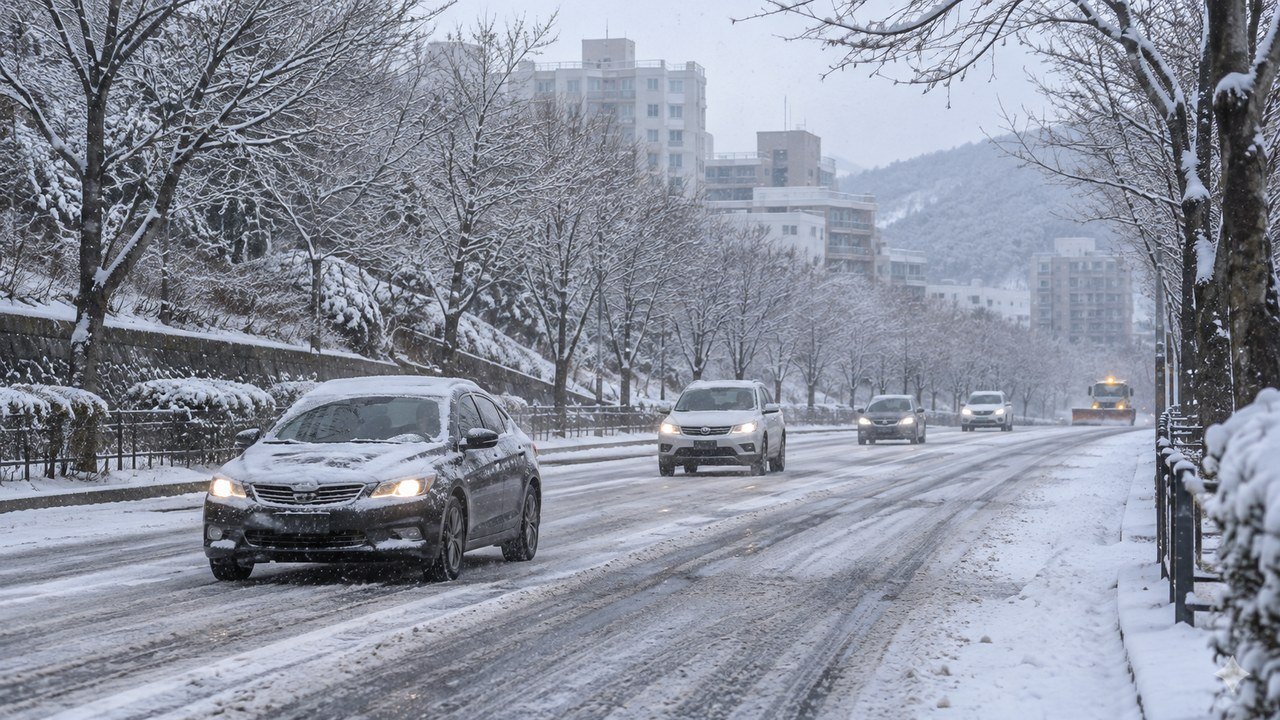
[Diary Point=Reporter Choi Seung-jin] South Korea’s Ministry of Land, Infrastructure and Transport will run its winter road-snow response program from Nov. 15 through March 15, 2027. The ministry says it has secured 660,000 tons of de-icing material and 8,200 pieces of equipment, and will operate a 24-hour response system throughout the period.
For drivers, this means snow-clearing operations and road-condition monitoring will be in full swing in preparation for heavy snow and icy roads. But plowing does not make a road safe right away, so drivers should consider both their travel plans and departure time when snow is forecast.
Response runs from Nov. 15 through March 15
The ministry has prepared 660,000 tons of de-icing material and 8,200 pieces of equipment in coordination with road-management agencies across the country. Drivers should check the speed limits and traffic-control notices displayed on electronic road signs and variable speed-limit signs.
When heavy snow is expected or a severe-weather advisory is issued, public transportation is recommended. If driving is unavoidable, avoid high speeds and slow down further on bridges, at tunnel exits, around curves and on shaded stretches of road.
Check tires and battery, and leave more space
Before setting out, check tire wear and pressure, and replace badly worn tires. Inspect the battery and engine coolant in advance, and keep winter gear such as snow chains in the car in case of sudden heavy snowfall.
Because stopping distances increase on snow and ice, the ministry advises leaving about twice the usual distance from the vehicle ahead. Avoid sudden starts, acceleration, braking and turns, and ease off the speed smoothly. Watch especially for black ice on bridges, at tunnel entrances and exits, and in shaded areas on cold mornings after snowfall or before dawn.
If you encounter a snowplow, slow down and keep at least 60 meters away. Do not stop on the shoulder, which is used by emergency and recovery vehicles as well as snow-clearing equipment. Before leaving, check for road closures through the National Highway Traffic Information Center at 1333 or the Expressway Traffic Information Center at 1588-2504.