
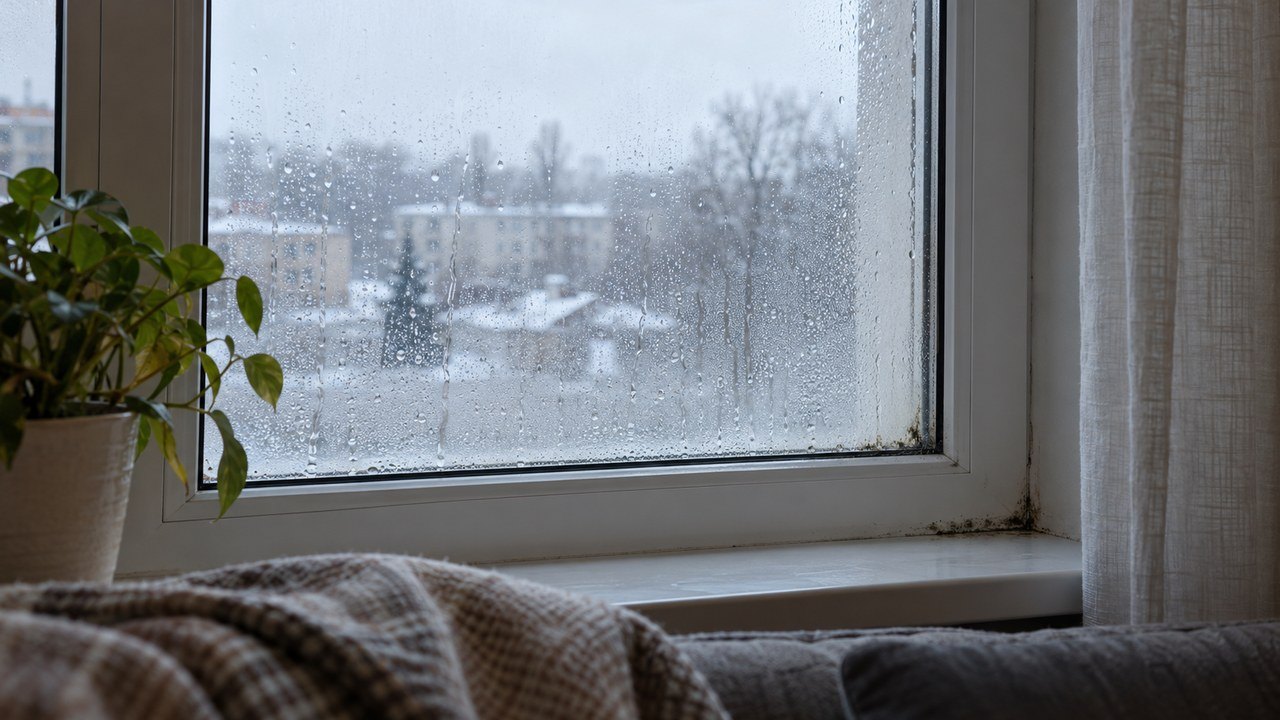
[Diary Point = Reporter Choi Seung-jin] The droplets that form on windows in winter aren't solely caused by humidifiers—they're condensation, which happens when water vapor in indoor air touches a cold window or wall surface and turns back into liquid. As heating raises indoor temperatures and humidifiers, indoor laundry drying, and cooking add more moisture to the air, condensation easily forms on surfaces with lower temperatures, such as exterior walls and window frames.
Droplets Form Where Cold Surfaces Meet High Humidity
According to condensation guidance from Korea Land and Housing Corporation (LH), condensation occurs when water vapor in the air contacts an indoor surface that is colder than the dew point temperature. Windows aren't the only vulnerable spots—corners of exterior walls, areas around balconies, and spaces behind built-in closets, where air tends to stagnate and surfaces stay cold, are also at risk.
Condensation itself doesn't automatically mean mold, but repeated moisture can soak wallpaper and finishing materials, creating conditions where mold can grow. LH notes that if indoor humidity stays above 80% for extended periods, mold can take hold even without visible condensation. If droplets appear, the first step shouldn't be switching off the humidifier entirely—check a hygrometer and address other sources of moisture at the same time.
Keep Humidity Within 40-60%, Adjusted to Your Windows' Condition
Air Korea recommends keeping indoor humidity between 40% and 60% during winter. This range is meant to avoid excessive dryness while still living comfortably, but even within this range, condensation can appear first on poorly insulated windows or walls. If droplets keep forming, it helps to shorten humidifier run times and avoid drying laundry indoors—or at least shorten indoor drying time—to lower overall moisture levels.
If laundry must be dried indoors, it's better to use a space with a ventilation fan rather than letting moisture spread through the entire living room, and to run the kitchen hood and bathroom exhaust fan right after cooking or showering. The humidifier's water tank and internal components should also be cleaned regularly. Korea's National Health Information Portal, run by the Korea Disease Control and Prevention Agency, lists cleaning the interior of humidifiers and ventilation units and managing filters as an important method for maintaining healthy indoor air.
Ventilate Twice a Day and Keep Furniture Away From Walls
LH advises ventilating thoroughly at least twice a day to reduce condensation and mold. Opening windows on opposite sides of a room to create cross-ventilation is effective, and additional ventilation right after cooking, showering, or doing laundry—activities that generate a lot of indoor moisture—helps as well. On days with high fine dust levels, check outdoor air quality before deciding how long to ventilate, and if you have a mechanical ventilation system, inspect its filters and operating condition.
Furniture shouldn't be pushed flush against exterior walls or windows; leaving a gap allows air to circulate. In particular, packing built-in closets and storage units full of clothes or bedding can trap stagnant air behind them, making condensation and mold more likely. LH's housing information guidance suggests not blocking the ventilation openings inside built-in closets and reducing how much is stored inside to keep air circulating.
Any existing droplets should be wiped away with a dry cloth, and window frames and walls should be allowed to dry thoroughly. If mold has spread widely or keeps coming back, the cause may not be simply a lifestyle issue but could involve insulation, window, or leak problems. If symptoms like a moldy smell, coughing, or wheezing persist, don't just keep cleaning—see a doctor, and for structural condensation in apartment buildings, request an inspection from the management office or the construction/defect repair department as well.