
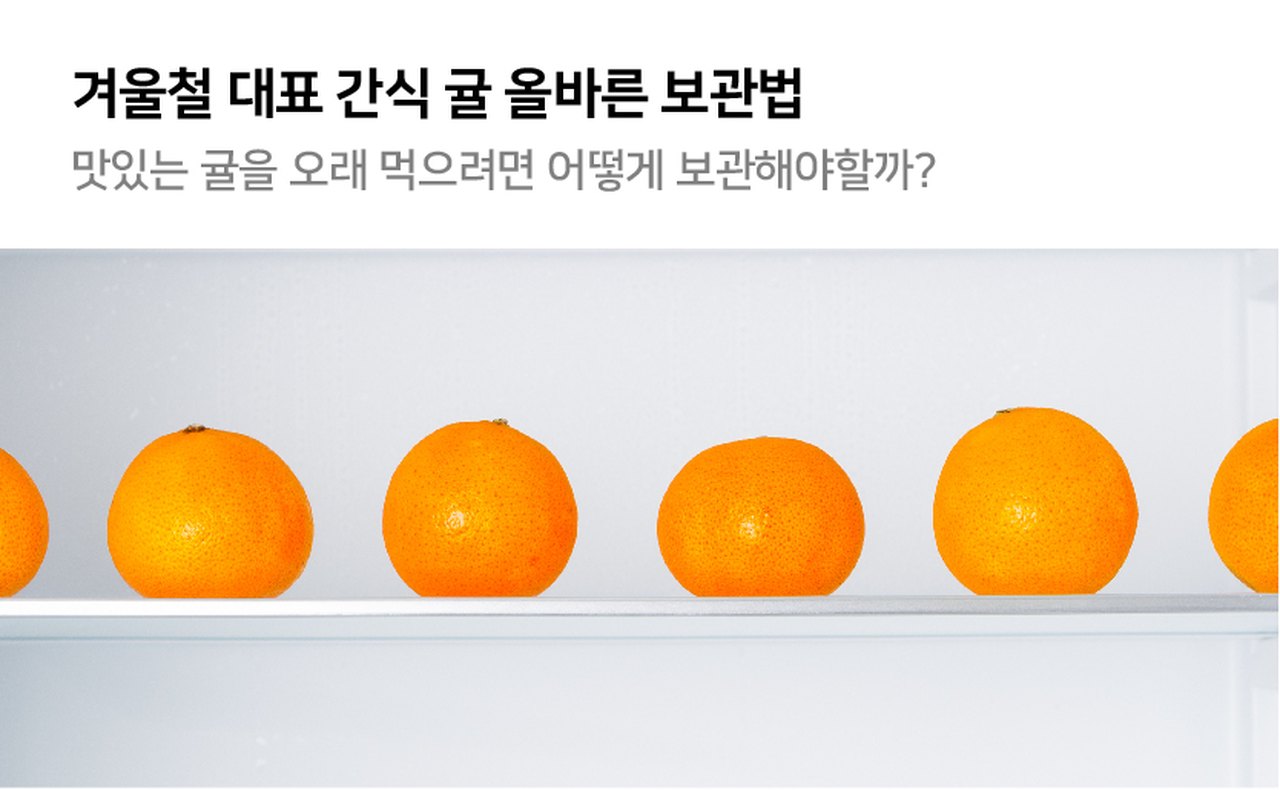
[Diary Point] Finding mold on one mandarin in a box doesn't mean you can simply toss that piece and eat the rest without a second thought. South Korea's Ministry of Food and Drug Safety (MFDS) advises discarding any moldy mandarin, then washing and drying the remaining fruit before storing it. Mandarins that were directly touching the moldy one, or that have gone soft, should also be removed — only after that should the rest be checked and eaten.
Mold Can Spread Beneath the Peel
Because mandarins have high moisture content, simply wiping off visible mold on the surface doesn't guarantee the fruit is safe. Mandarins that are bruised or have torn peels may already be contaminated inside, so they should be discarded whole. Moldy mandarins can trigger allergic reactions, and depending on the type of mold, the toxins it produces aren't always eliminated by washing or heating alone.
If mold is spotted on a single mandarin, take out all the surrounding fruit and check each one for mold, softness, oozing liquid, or an off smell. The safest approach is to discard any mandarin that was touching the moldy one, keeping only those with firm skin and no change in smell or color. If mold has spread throughout the box or most of the fruit has gone soft, it may be better to throw out the entire batch rather than sort piece by piece.
Wash and Thoroughly Dry the Remaining Mandarins
Mandarins deemed safe to eat should be rinsed under running water and dried completely. Don't mix washed and unwashed mandarins together, and avoid stacking them while still wet. The MFDS suggests lining a container with newspaper or paper towels and placing the dried mandarins with some space between each piece.
Never try to simply wash and eat a mandarin that already has mold on it. Cutting away just the visibly moldy spot doesn't guarantee the inside is clean. Even though mandarins are peeled before eating, mold can spread to other fruit through hands, knives, or cutting boards — so moldy mandarins should be separated and discarded immediately.
Store at 3-4°C with 85-90% Humidity
The MFDS recommends storing mandarins at 3-4°C with humidity between 85% and 90%. Temperatures below 1°C can cause cold damage to the fruit, so avoid overly cold spots. Even in the refrigerator, it's better to leave gaps between the mandarins for airflow rather than packing them in tightly.
Sealing mandarins in a plastic bag or airtight container can trap moisture and odor inside. The MFDS notes that sealed storage can cause alcohol to build up, producing an unusual smell. While stored, check regularly for moisture pooling at the bottom or any mandarin going soft, and separate it from the rest immediately if a problem appears.
If symptoms like hives, rashes, vomiting, or diarrhea persist after eating a moldy mandarin, see a doctor. Washing and drying the remaining fruit, then storing it spaced apart at 3-4°C, can slow how quickly spoilage spreads through the rest of the box.