
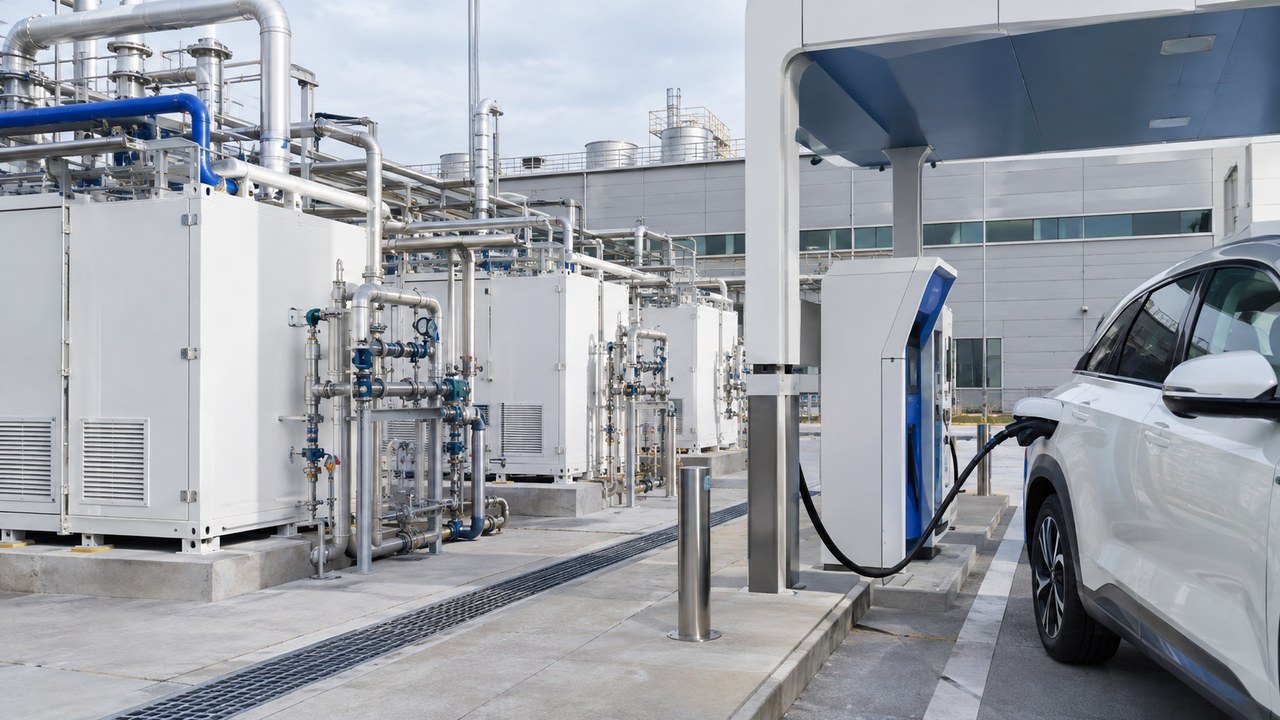
[DiaryPoint | Reporter Um Ju-yong] Hyundai Motor Group unveiled a 5-MW water electrolysis module and a fuel-cell system for commercial vehicles at World Hydrogen Expo 2026 (WHE 2026), which opened Nov. 4 at KINTEX in Goyang. The expo runs through Nov. 6 and presents the group’s hydrogen strategy across production, vehicles and refueling operations.
Water electrolysis uses electricity to split water into hydrogen and oxygen. Hyundai Motor Group introduced a design that combines 12 proton-exchange membrane (PEM) stacks into a single 5-MW electrolyzer stack module. The company says one module can produce about 700 tons of hydrogen annually.
The group says multiple modules can be connected in parallel to scale up to production facilities rated in the hundreds of megawatts. It operates a 1-MW containerized pilot facility in Gwangju and is pursuing additional pilot projects in Boryeong, Buan and Jeju.
The exhibit also featured a Waste-to-Hydrogen (W2H) model that converts discarded resources into hydrogen. The group presented a circular-use model centered on its energy project in Cheongju, along with a biogas-based hydrogen production facility in Paju and a project in Indonesia.
Commercial vehicle fuel cells and automated refueling demo
In the mobility section, Hyundai Motor Group presented the 2027 Nexo and, for the first time, a more durable fuel-cell system for commercial vehicles. A demonstration showed an automated refueling robot identifying the inlet and connecting the nozzle to a hydrogen-powered refuse truck.
Hyundai Motor Group said it would “identify a range of applications based on its hydrogen production capabilities and provide solutions optimized across the value chain, turning them into tangible businesses.” The display also included a hydrogen-powered train model, a rail fuel-cell module and an integrated control system for monitoring commercial vehicle operating data.
South Korea has 49,634 hydrogen vehicles and 514 stations
The Korea Hydrogen Alliance’s Comprehensive Hydrogen Economy Information Portal lists 49,634 registered hydrogen vehicles in South Korea and 514 commercial hydrogen refueling stations. For drivers considering a hydrogen vehicle, the location and operating status of stations along regular routes can matter as much as vehicle performance.
The 2027 Nexo currently sold by Hyundai starts at 76.47 million won for the Modern trim after tax benefits. Hyundai says the price can start at about 36.97 million won after applying both government and local subsidies; subsidy amounts vary by local government.
Drivers can check station construction and operating data on the Zero-Emission Vehicle Integrated Website, and find station locations, prices and operating information through the Hydrogen Distribution Information System, Haing. WHE 2026 closes Nov. 6.