
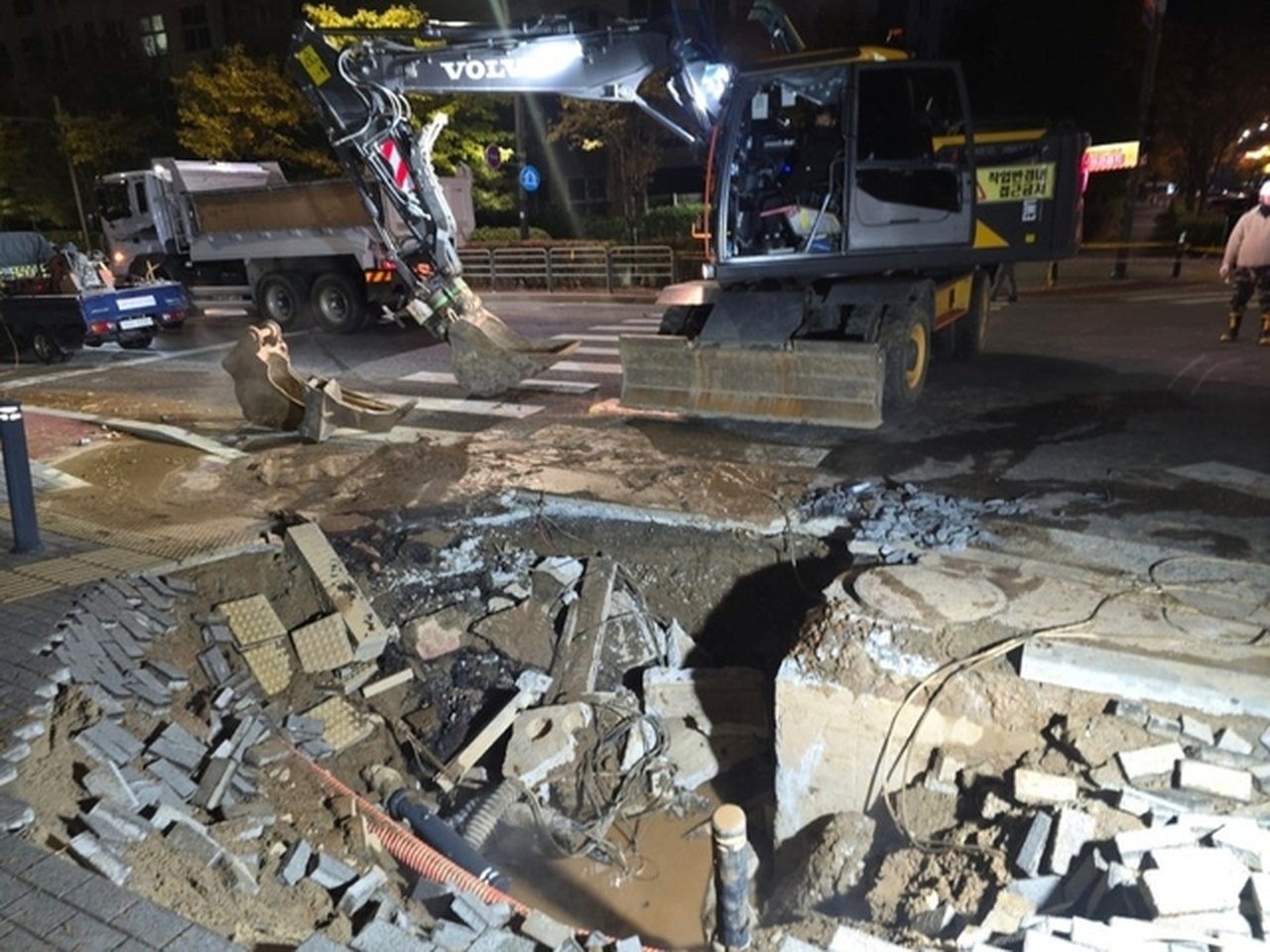
[Diary Point = Reporter Kim Jeong-hun] A district heating pipeline ruptured near an apartment complex in Magok-dong, Gangseo-gu, Seoul, at around 8:18 p.m. on the 6th, cutting hot water and heating to 8,965 homes. Seoul Energy Corporation worked through the night to repair it, restoring service at around 8:45 a.m. on the 7th. Seoul Metropolitan Council records show that the corporation supplies district heating to 260,000 homes across six Seoul districts.
The accident caused the ground nearby to cave in and a traffic signal to topple. A man in his 40s passing through the area fell into the sinkhole and suffered second- to third-degree burns over 60% of his body. A corporation employee working on repairs also suffered minor burns, and both were taken to a hospital. The figures confirmed in earlier reports are burns over 60% of the passerby’s body and minor burns for the employee.
Service outage lasted about 12 hours
The pipeline rupture cut hot water and heating to 8,965 homes. About 12 hours and 27 minutes passed between the accident and the completion of repairs. Seoul Energy Corporation’s district heating pipelines span 432 kilometers; Seoul Metropolitan Council records show that 56% of them are at least 20 years old.
If hot water or heating suddenly stops in a district-heated apartment complex, checking notices from the building management office and the complex can help determine whether the outage affects the entire complex or only an individual home’s equipment. If multiple homes experience the same problem at once, residents can ask the management office to contact the utility provider and check on repairs. In its 2026 heat-pipeline safety plan, the Seoul Metropolitan Government said it would conduct safety inspections of pipelines at least 20 years old and replace pipelines in poor condition rated Grade C.
Gangseo District Office investigating cause
Gangseo District Office is investigating the exact cause of the accident. So far, the confirmed plan is to determine what happened; no conclusion has been reached about why the pipeline ruptured. Seoul Metropolitan Council records also show that Seoul Energy Corporation has planned to replace 13.2 kilometers of pipeline in 2026, with 13.2 billion won allocated as a city investment.
The investigation and treatment of those injured are continuing after service was restored. Residents can check outage notices from their apartment management office and follow-up updates from Seoul Energy Corporation and Gangseo District Office. Seoul Metropolitan Council records also outline plans to increase the number of pipeline inspectors from 12 to 18 for continuous, round-the-clock inspections, and to expand the fleet of vehicles equipped with thermal imaging cameras from two to four, shortening inspection intervals from seven days to four.