
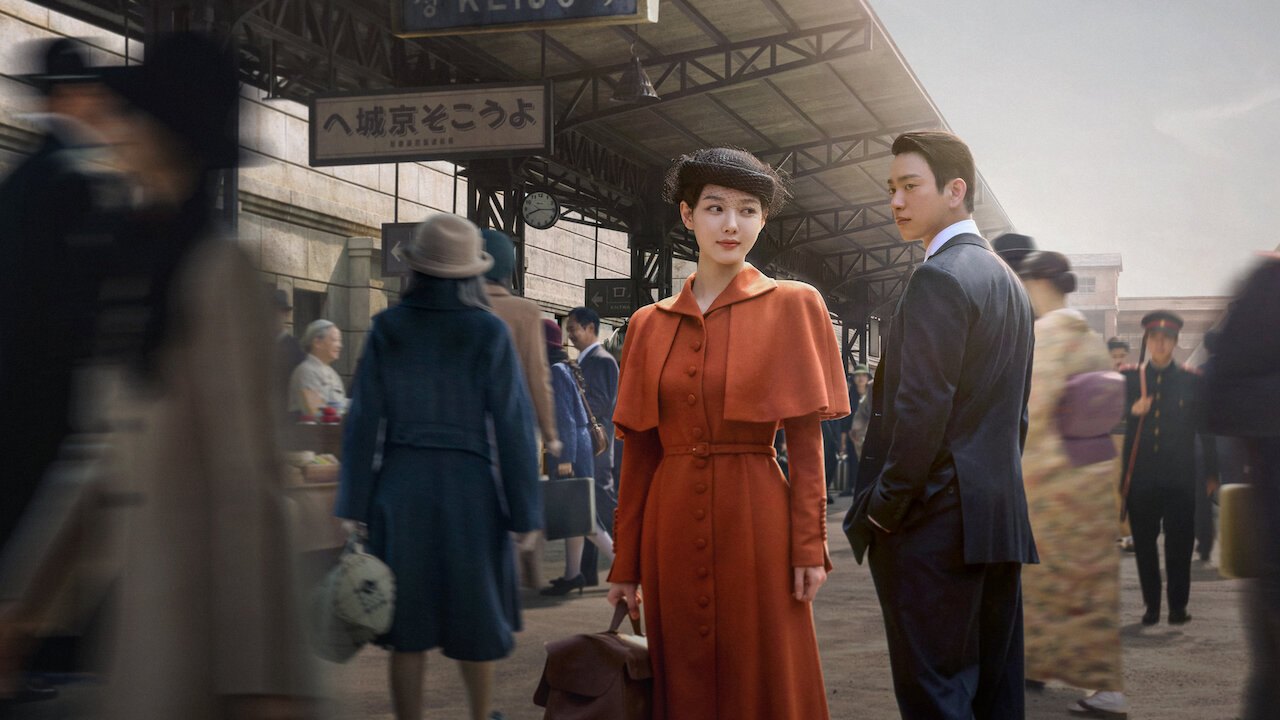
[DiaryPoint Reporter Park Bo-young] The real event behind the “Gyeyam-ri Incident” in tvN’s weekend drama 100 Days of Lies was the Jeam-ri and Gojuri massacre, which took place on April 15, 1919, in Jeam-ri, Hyangnam-myeon, Suwon County, Gyeonggi Province—now part of Hyangnam-eup, Hwaseong. In its November 15 episode, the drama posted a nationwide household average rating of 10.4% and a peak of 11.3%, according to Nielsen Korea. It also ranked No. 1 in the TV-OTT drama buzz rankings for the second week of November, compiled by Good Data Corporation’s FUNdex.
The Japanese military’s massacre of civilians at a Jeam-ri church in 1919
In the drama, the Gyeyam-ri Incident unfolds during the March 1 Independence Movement, when military police officer Sato Shinichi (Jin Seon-kyu) locks residents inside a church and opens fire before setting it ablaze. The massacre drives Yu So-ran (Kim Hyun-joo) and others to vow revenge. In reality, on April 15, 1919, troops led by Japanese Army Lieutenant Toshio Arita summoned men aged 15 and older to the Jeam-ri church in retaliation for the independence demonstrations.
The sole surviving witness, the late Jeon Dong-rye (1898–1992), was 21 at the time and had lost her husband. In testimony recorded during her lifetime, she said: “The Japanese lieutenant said he would deliver a notice and a lecture, then gathered 32 church members inside. They shut the windows and doors and began firing all at once.” She continued: “When everyone inside had fallen, the soldiers set the church on fire. A woman pushed her infant out a window and begged them to spare the child, but they stabbed the baby to death with a bayonet.” A total of 29 people were killed that day—23 in Jeam-ri and six in nearby Gojuri—and about 30 homes in the village were burned.
Survivor’s testimony led to the recovery of 23 sets of remains in 1982 and exposed the massacre internationally
The atrocity came to wider attention after Canadian missionary Frank Schofield, known in Korea as Seok Ho-pil, visited the site soon after the killings. He photographed the burned church and the bodies, then brought the massacre to international attention in a report titled Report on the Barbarities at Suwon. The truth nearly remained buried even after Korea’s liberation from Japanese colonial rule. In 1982, an excavation based on Jeon’s testimony recovered the remains of 23 victims and personal effects from the church site. The area is now designated the Hwaseong Jeam-ri March 1st Movement Martyrs Historic Site. On April 15, 2024, the Hwaseong Independence Movement Memorial Hall reopened in an expanded space, displaying records related to the events.
Kim Yoo-jung and Park Jin-young rank first and second in buzz; four episodes remain
Set in Gyeongseong (now Seoul) in 1932, 100 Days of Lies is a 16-episode spy romance about pickpocket Lee Ga-kyung (Kim Yoo-jung), who becomes an undercover agent, and Kim Tae-woong (Park Jin-young), an interpreter for the Japanese Government-General of Korea. The two actors also ranked first and second, respectively, in the cast buzz rankings for the second week of November. Writer Ryu Bo-ri explained her intention behind the series: “I think the hope of showing a brilliant light to the people they loved, even if they themselves were to die, became a bright torch for the independence fighters.” Director Yoo In-sik described Kim Yoo-jung as “like a champagne bottle just about to pop.”
100 Days of Lies premiered on October 10 with a nationwide rating of 5.3%. It airs Saturdays and Sundays at 9:10 p.m. on tvN and streams on TVING and Netflix. With four episodes left, episode 13 is scheduled to air on November 21 at 9:10 p.m.