
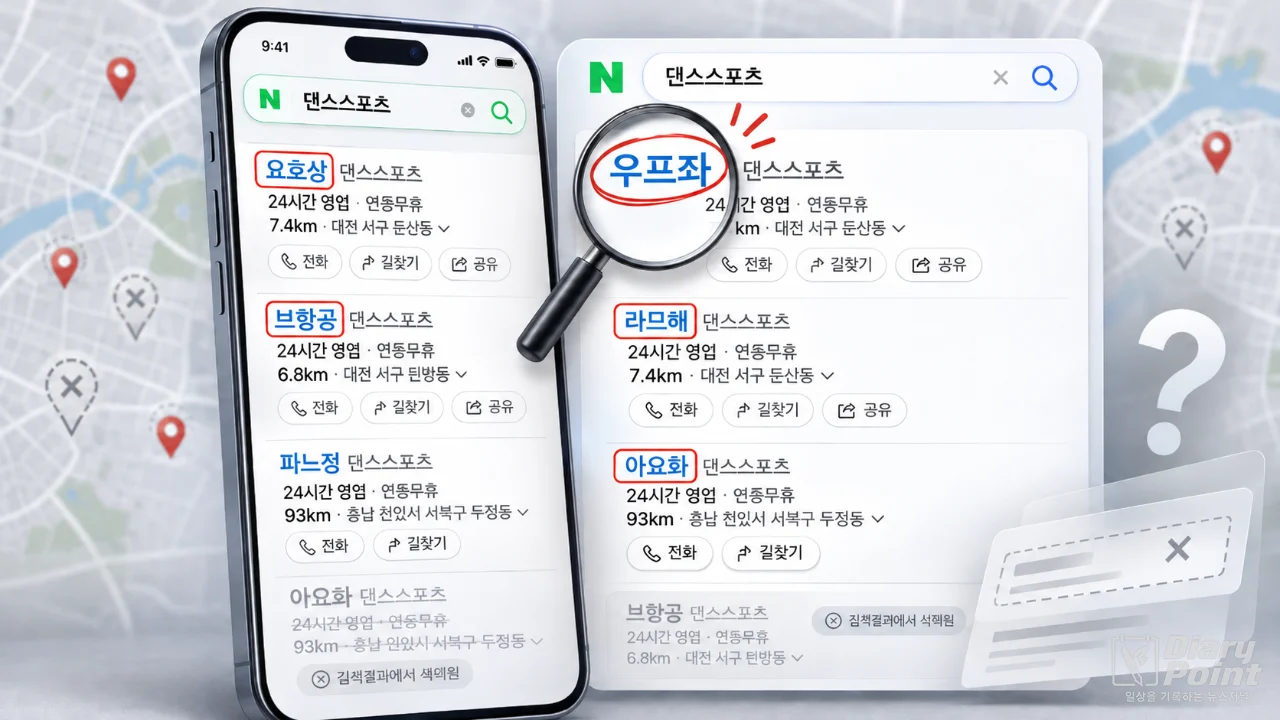
[Diary Point | Reporter Eom Ju-yong] After posts circulated online about businesses with baffling three-character names appearing when users searched for a place name alongside “dance sports,” Naver removed the listings from its search results on Nov. 23. The company said it had determined the information was not legitimate business information.
The same listings appeared in Suwon, Wonju, Cheonan, Gumi and Jeonju
The controversy began with a post on the online community FM Korea on Nov. 21. The author said that searching Naver for a place name and “dance sports,” then clicking “More” in the business list, brought up businesses with strange names. Similar results reportedly appeared in Suwon and Wonju, as well as Cheonan, Gumi and Jeonju.
Names mentioned included “Yohseungsang,” “Beuhyanggong,” “Ganeupae,” “Ayogong,” “Deunongnong” and “Daseongja.” Other names cited were “Okgau” and “Yeopaewoo” in Suwon, and “Bameuchae” and “Deusinneu” in Wonju. Most were three syllables long and difficult to make sense of.
All of the businesses were listed as open 24 hours a day, every day of the year. Street-view images showed no signs or storefronts at the listed addresses, and the listings contained little beyond phone numbers. The post quickly spread to platforms including X, formerly Twitter, and Threads.
Speculation spreads that the names were “spy rendezvous codes”
Some users speculated that the names were codes for secret meeting places used by Chinese spies, or that the listings appeared because Naver had come under Chinese control. Police and other investigative authorities have made no announcement supporting those claims.
Posts reporting similar search results also appeared on online communities in 2024, two years ago. That suggests the listings may have been visible for some time, rather than having appeared suddenly.
Threads post viewed 520,000 times; comments range from “meeting place” theories to “marketing stunt” claims
A related post on Threads drew more than 520,000 views in just over two days. The author pointed to the strange business names and lack of information, and claimed that the phone numbers all began with Seoul’s “02” area code despite the businesses being in different cities, including Suwon. That claim about the numbers had not been independently verified by the time this article was written.
Comments ranged from surprise to suspicion. Some said Street View showed no signs, or even no shops on certain alleys. Others reported similar results in Osan, Byeongjeom, Dongtan, Pyeongtaek, Gwangmyeong and Daegu. One user said the listings disappeared while they had nodded off during a search. Some argued that the names mixed Chinese and Korean readings of Chinese characters and therefore likely referred to meeting places; others speculated that a code could be passed using book page numbers and character positions.
Others suggested the listings might have been created by businesses trying to collect phone numbers. Some also questioned Naver’s responsibility, saying its system requires procedures such as submitting a business registration certificate. These comments were individual users’ speculation and have not been confirmed.
Naver: “Believed to be old listings; we’re investigating how they were created”
Naver said it became aware of the issue after it spread online over the weekend and took emergency action on Nov. 23 to hide the listings from search results. A company representative said the business names had not been added recently. The company believes they were old listings created before it introduced its current verification process, which checks business registration certificates.
Naver said it is investigating when the abnormal listings were registered, who submitted them and how they were created. The company added that dance-sports businesses currently appearing in search results are legitimate listings.
Who registered the listings, and why?
What is known so far is that listings for businesses with no clear physical presence remained on Naver Maps for an extended period, and that Naver has since removed them from search results. The investigation will have to establish who registered them and for what purpose.
Unfamiliar phrases have fueled rumors before. In 2013, a series of questions and answers containing nonsensical repeated words appeared on Naver Knowledge iN, prompting claims that they were a code. At the time, some suggested the text might have resulted from ordinary expressions being replaced with other words, or might have been viral marketing by a business.