
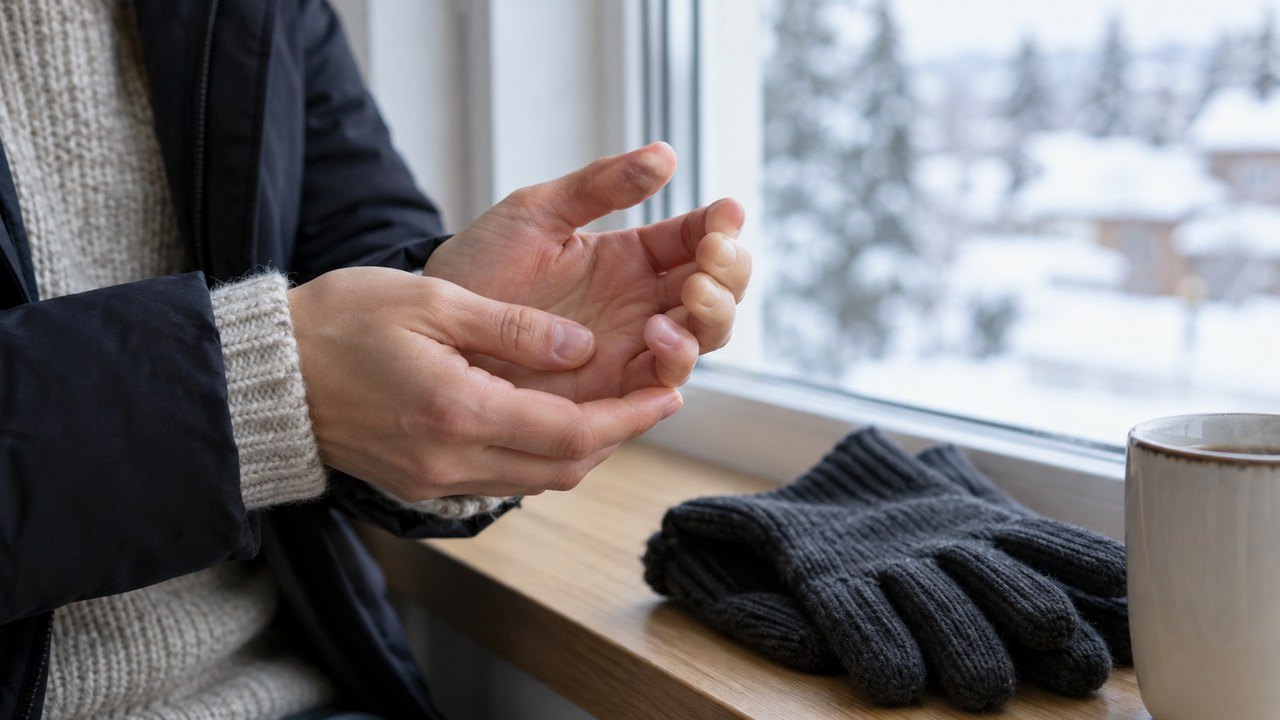
[Diary Point = Reporter Bo-young Park] If your hands and feet repeatedly feel cold and numb after exposure to cold temperatures or stress, and your fingers or toes turn white or blue, you may be dealing with something more than ordinary poor circulation — it could be Raynaud's phenomenon. This condition occurs when small blood vessels in the extremities suddenly constrict in response to cold or tension, cutting off blood flow. A key feature is that color and sensation return once the area is warmed.
Blood Vessels Overreact to Cold, Causing Color Changes
Raynaud's phenomenon begins when the blood vessels at the tips of the fingers and toes narrow suddenly. The skin first turns pale, then takes on a bluish tint, and can flush red once the vessels reopen and blood flow returns. This process is often accompanied by numbness, pain, or a burning sensation. In some cases, the tip of the nose or earlobes can be affected as well.
People who simply have naturally cold hands and feet, or who feel chilly in cold weather, typically don't go through this distinct three-stage color change. Raynaud's phenomenon, by contrast, tends to follow a specific trigger — such as putting your hands in cold water or stepping outside — and symptoms ease once you move somewhere warm. This distinction can be a useful clue, but it isn't enough on its own to confirm a diagnosis.
One-Sided Symptoms or a Late Onset Warrant Further Investigation
Raynaud's phenomenon can occur on its own with no clear underlying cause — known as primary Raynaud's — or it can appear alongside autoimmune conditions such as systemic sclerosis, lupus, or rheumatoid arthritis, in which case it's called secondary Raynaud's. Primary Raynaud's usually affects both hands symmetrically and tends to be less painful, while secondary Raynaud's can be more severe and may lead to skin or vascular damage.
Doctors advise not to delay seeking medical care if the condition first appears after age 40, occurs repeatedly on only one hand or foot, causes severe pain, or leads to sores or ulcers on the fingertips that are slow to heal. If swollen or hardened skin on the fingers, joint pain, morning stiffness, shortness of breath, or a dry cough appear alongside these symptoms, it's important to check for an underlying condition.
Tracking Symptoms and Staying Warm Are the First Steps
Before seeing a doctor, it helps to note when symptoms started, how long they lasted, which finger was affected first, and whether the skin turned white, blue, or red. Taking photos when symptoms occur, and checking whether they appear symmetrically on both hands or feet, can also be useful information. Depending on the case, doctors may order blood tests, a cold-stimulation test, nailfold capillary examination, or vascular studies based on the symptoms and physical exam.
When heading outdoors, wearing gloves and socks isn't enough — keeping the whole body warm matters, and direct contact with cold objects should be minimized. If your hands suddenly feel cold, slowly moving your fingers and toes indoors and warming them with lukewarm water can help. Smoking should be avoided since it constricts blood vessels and can worsen symptoms, and caffeine along with certain cold medications may also play a role — so if symptoms keep recurring, it's worth telling your doctor what you've been taking.
Having cold hands and feet alone doesn't mean you have Raynaud's phenomenon or an autoimmune disease. But if skin color changes and pain keep recurring or persist, it's best not to just manage it with lifestyle habits — seeing a rheumatologist is recommended. If fingertips turn black or develop sores, prompt evaluation is especially important.