
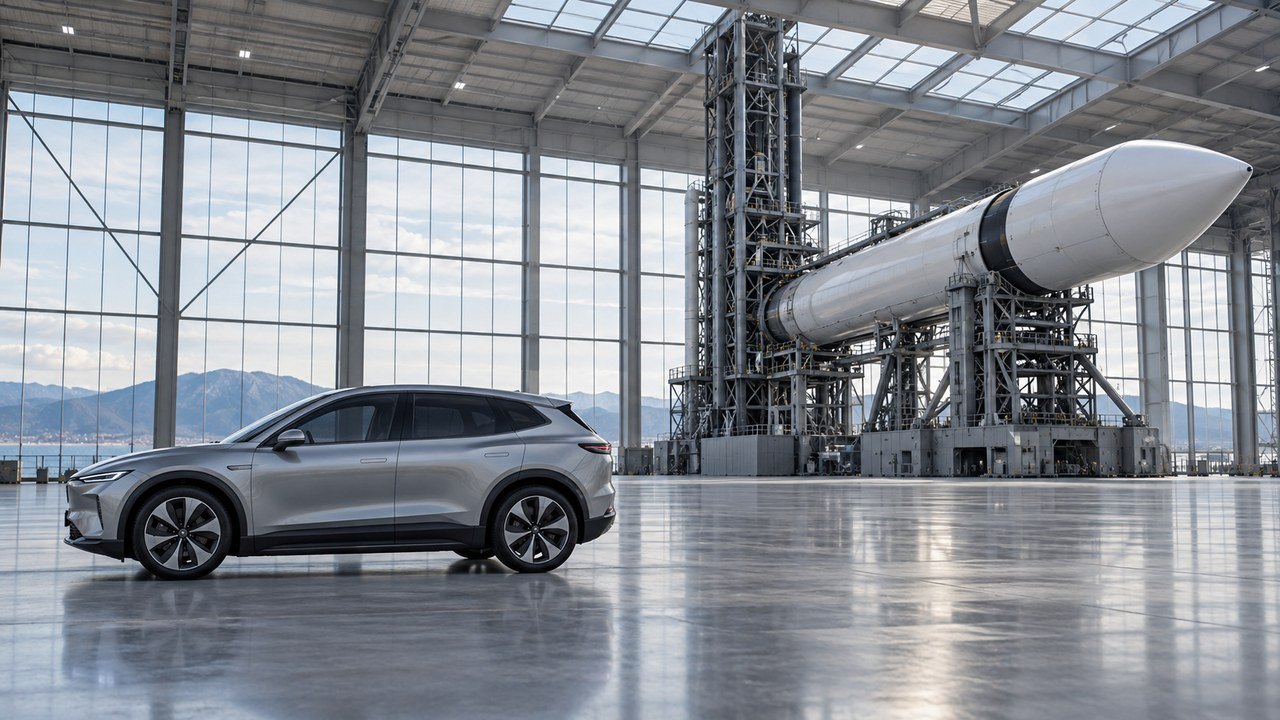
[Diary Point = Reporter Eom Ju-yong] Tesla and SpaceX have each confirmed they formed special committees to evaluate a potential merger. Elon Musk has said the two companies could collaborate on AI, semiconductors, robotics and connectivity technology, calling a merger meaningful — but no deal terms or timeline have been finalized.
The talks are drawing attention because they could bring the two companies' businesses under one roof. Tesla develops electric vehicles, self-driving technology and humanoid robots, while SpaceX runs rockets, satellite internet and AI-related operations. The two firms already cooperate on some projects, including AI chip production, so a merger could allow them to scale data infrastructure, computing power and robotics technology together.
This is a review process, not a merger announcement
Tesla's quarterly filing says a special committee made up of independent-minded directors has been formed to review expanding ties with SpaceX. SpaceX's quarterly filing similarly states that a special committee has been created to evaluate a potential combination, but stresses that the deal cannot proceed without further approval from the committee, the boards, and controlling shareholders — and there is no guarantee a transaction will be completed.
Musk, who serves as CEO of both companies, is treated as a party with a conflict of interest in the discussions. According to reports, the companies are weighing several possible structures, including SpaceX acquiring Tesla, forming a new holding company, or a stock swap, with outside advisers already involved. The talks remain at an early stage, and Tesla shareholders do not currently hold any direct stake in SpaceX.
Risk factors Tesla shareholders should check
The first is the exchange ratio and dilution. If the merger proceeds as a stock swap, the stake Tesla shareholders receive in the combined company will depend on how each company is valued and how many shares are issued. If SpaceX's high valuation is fully reflected, it could benefit Tesla shareholders — but if Tesla's assets or growth potential are undervalued in the terms, existing shareholders' stakes could be diluted.
The second is Musk's control and the fairness of the deal. Tesla disclosed that it invested $2 billion in SpaceX stock in March 2026, but holds less than a 1% stake. After a merger, how Musk's voting power and economic stake would change, and whether the special committee negotiated price and terms independently, become central issues. Investors should also watch whether this related-party transaction could trigger prolonged legal disputes, as happened with Tesla's past acquisition of SolarCity.
The third is the combination of business risks. Tesla shareholders would be exposed not only to EV demand and self-driving regulations but also to SpaceX's massive space and AI infrastructure investments, government contracts, and political and regulatory variables. While SpaceX's growth could create new opportunities for Tesla, the scale of its investments and the risk of business setbacks could also weigh on a combined company's finances and stock price.
For these reasons, current stock price movements alone are not enough to conclude whether the merger will happen or who stands to benefit. Going forward, investors should watch for the special committee's deal terms, an independent adviser's fairness opinion, the final exchange ratio, shareholder meeting agendas, and any required regulatory approvals. Neither Tesla nor SpaceX has yet disclosed a merger agreement or a set closing date.