
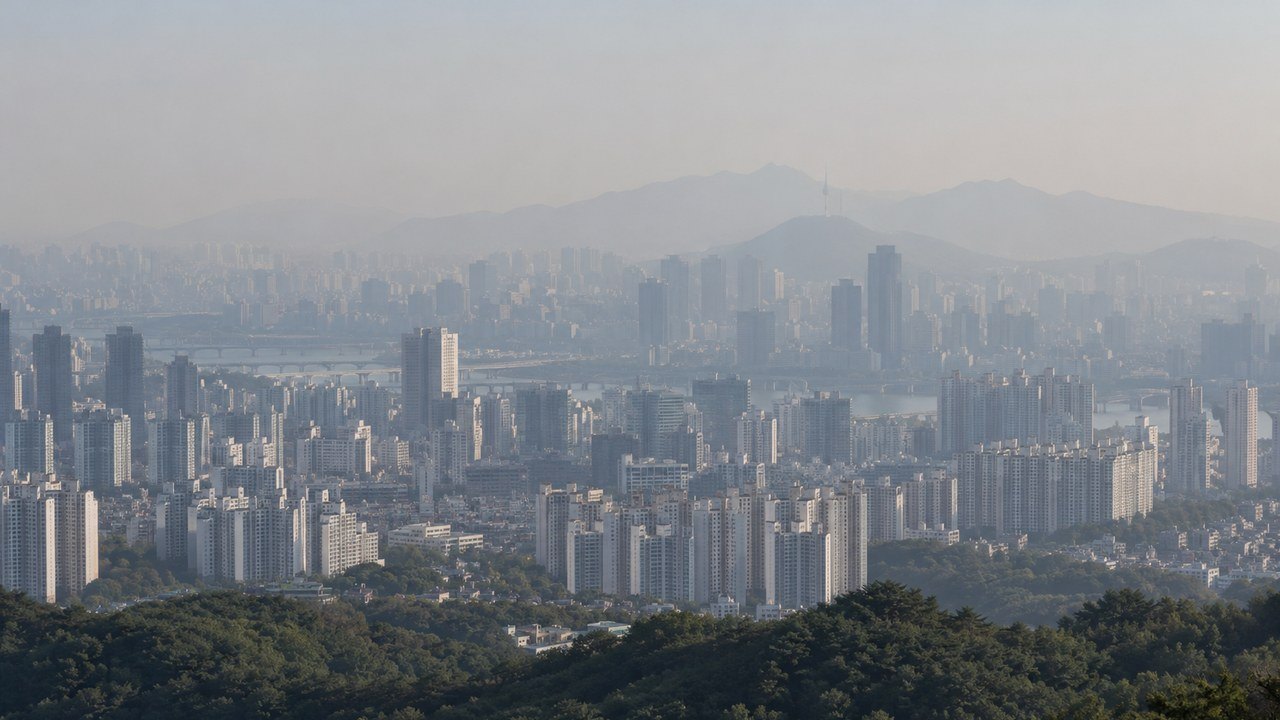
[Diary Point | Reporter Eom Ju-yong] Seoul recorded yellow dust in November for the first time since 2020 on Nov. 2. Fine dust (PM10) levels rose in Seoul, the greater capital region, parts of the west coast and Jeju. More yellow dust is expected to move into the capital region and South Chungcheong Province overnight Nov. 3.
According to reports citing Korea Meteorological Administration observations, the one-hour average PM10 concentration at the Seoul Weather Station in Jongno District was 149㎍/㎥ at 1 p.m. on Nov. 2. Readings were 138㎍/㎥ on Heuksando, 104㎍/㎥ in Gosan on Jeju Island and 97㎍/㎥ in Anmyeondo, South Chungcheong Province—all in the “poor” range. These are readings from that time and may differ from current levels.
The dust originated on Oct. 31 in areas including the Mongolian Plateau and moved in on northwesterly winds. The National Institute of Environmental Research said some of the dust that arrived on Nov. 2 would linger, and more could move into western areas overnight Nov. 3, temporarily pushing fine dust levels in the capital region and South Chungcheong Province into the “poor” range. The daily average was forecast to remain “moderate.”
Check real-time readings and forecasts for your area before going out
If you are commuting, taking children to or from school, or planning outdoor activities, check real-time readings by province and monitoring station on AirKorea. Levels change throughout the day, so a morning reading may not reflect conditions in the evening. Check AirKorea and the Korea Meteorological Administration’s yellow dust observation page again. Fine dust forecasts are issued four times a day—at 5 a.m. and 11 a.m., and 5 p.m. and 11 p.m.—and can help you track what to expect.
AirKorea advises limiting outdoor activities when yellow dust is observed or concentrations are high, and wearing a mask if you must go outside. Wash your hands and feet after returning home, and clean items exposed to the dust before using them again. If you have difficulty breathing, stop using the mask and consult a professional.
Ventilate briefly when real-time readings are low, and keep windows closed while yellow dust is moving in to reduce the amount entering indoors. AirKorea recommends ventilating when concentrations are low. The areas affected and dust levels overnight Nov. 3 may vary with the airflow, so check the latest forecast before going out in western areas, including the capital region and South Chungcheong Province.