
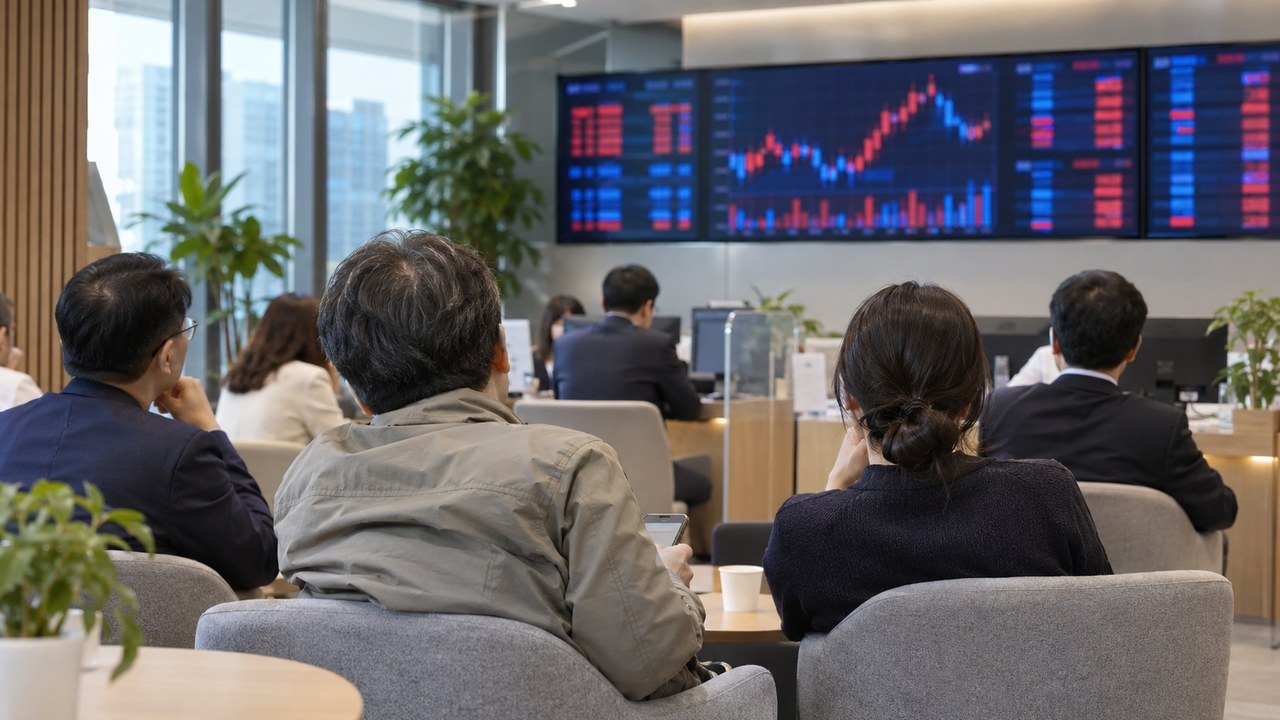
[Diary Point | Reporter Kim Jeong-hun] The KOSPI fell to 4,924.61 at 9:03 a.m. on Nov. 6, down 8.52% from the previous session and below the 5,000 mark. The Korea Exchange triggered a Level 1 circuit breaker, halting trading across the market for 20 minutes.
The KOSPI opened at 5,263.26, down 2.24%, before plunging just three minutes after the opening bell. It was the first time the index had fallen into the 4,000s intraday since February. After trading resumed, the index narrowed its loss to 4.45%, reaching 5,144.31 at 11:28 a.m.
U.S. tech sell-off fueled semiconductor losses
U.S. stocks fell overnight as concerns grew that the midterm election results could affect data center investment and regulation of the AI industry. The Nasdaq dropped 5.52%, the S&P 500 fell 4.36%, and the Philadelphia Semiconductor Index plunged 12.2%.
The KOSPI, where Samsung Electronics and SK hynix carry significant weight, also came under pressure from semiconductor selling. SBS reported that the two stocks fell more than 7% and 9%, respectively, early in the session; intraday reports said their losses widened further at one point.
A circuit breaker briefly pauses trading across the market
Under Korea Exchange rules, a Level 1 circuit breaker is triggered when the KOSPI remains at least 8% below its previous close for one minute. Trading across the market is then halted for 20 minutes, followed by 10 minutes of call-auction trading before continuous trading resumes.
During the halt, investors cannot place new orders; only cancellation orders are allowed. A circuit breaker differs from a trading halt on an individual stock, so investors should check their order status and whether trades were executed in their brokerage app after trading resumes.
Early in the session, retail investors bought a net 42 billion won and institutions bought a net 86 billion won, while foreign investors sold a net 130 billion won. After trading resumed at 9:45 a.m., the index rebounded to 5,003 and later recovered above 5,100 by 11:28 a.m.
The day's plunge was driven not by a domestic semiconductor industry announcement, but by concerns over U.S. AI and data center investment and a global sell-off in technology stocks. Separately from the KOSPI circuit breaker, a sell-sidecar was triggered at 9:34 a.m. after sharp moves in KOSPI 200 futures, suspending the effectiveness of program-trading orders for five minutes.