
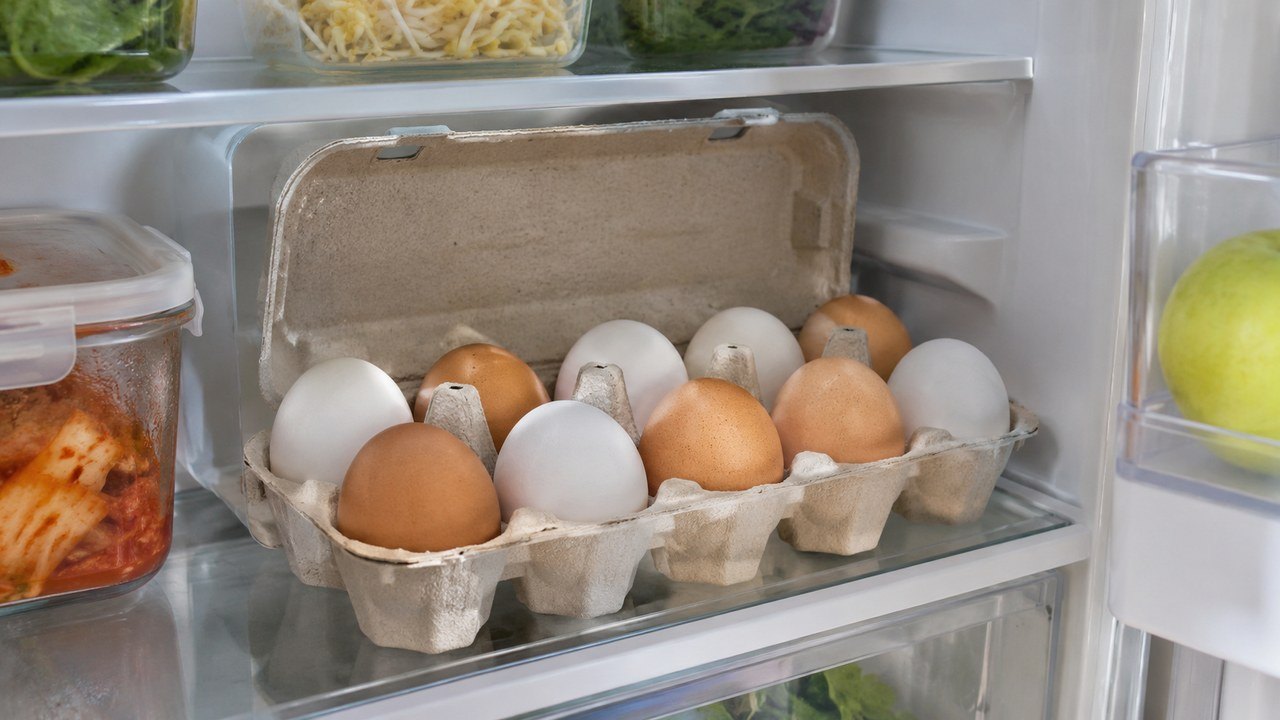
[Diary Point = Reporter Choi Seung-jin] Eggs are best stored unwashed toward the back of the refrigerator. Avoid the door shelves, where opening and closing the door can cause temperature swings and jostling, and keep the refrigerator at 4°C or below.
Washing can damage the shell’s protective coating
Eggshells have a protective coating that helps block outside contaminants. Korea’s National Institute of Animal Science says washing eggs at home can damage this coating, making it easier for microorganisms to get in and potentially reducing freshness. It recommends storing eggs unwashed at 4°C.
There is no need to rinse or wipe eggs before storing them; keep them in their packaging toward the back of the refrigerator. Even if you see dirt on a shell, it is best not to wash the egg before putting it away. Use a dedicated container or cover to keep eggs from touching other foods, and check the storage instructions on the package.
Store eggs toward the back and keep them at 4°C or below
The National Institute of Animal Science, part of the Rural Development Administration, reported that a study tracking Salmonella on eggs at different storage temperatures found that bacterial growth was suppressed at 4°C. In the test, Salmonella on eggs stored at 4°C fell by more than 99% on the first day, and growth remained suppressed by more than 99.9% through day 35.
Eggs on the refrigerator door are shaken each time it opens and closes, and they are exposed to more frequent temperature changes. Keep them on an interior shelf. If you buy a large quantity at once, use the older eggs first to make storage easier to manage.
Wash your hands after handling shells and cook eggs thoroughly
Salmonella can be present on eggshells and can spread to other foods through hands or cooking utensils. After handling eggs, wash your hands with soap and water. Also wash any knives, cutting boards, or countertops that have touched shells or raw egg.
Undercooked eggs and foods containing raw eggs can cause Salmonella food poisoning. Korea’s Food Safety Korea guidance recommends cooking eggs until fully set and heating cooked foods to 74°C for at least one minute. If symptoms such as abdominal pain, diarrhea, vomiting, or fever persist, seek medical care.