
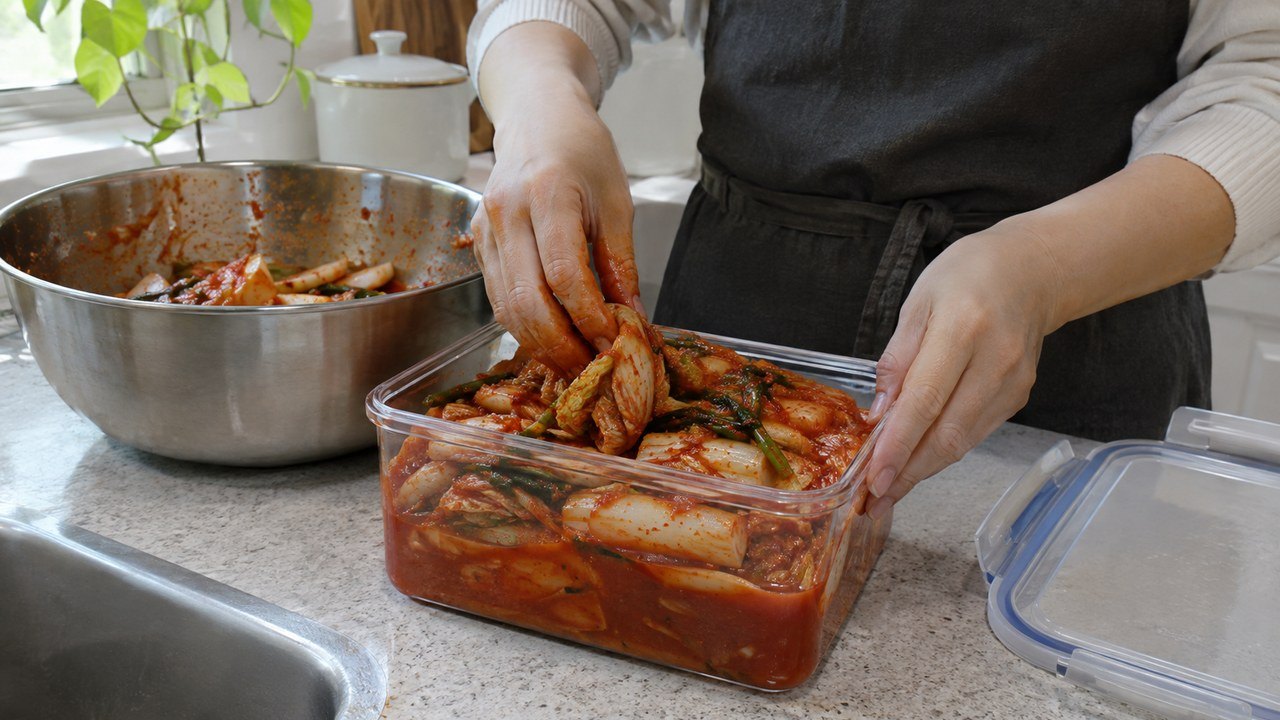
[Diary Point | Reporter Eom Ju-yong] If you plan to keep kimjang kimchi for a while, it’s best to put it in a kimchi refrigerator soon after making it. Kimchi continues to ferment slowly even at low temperatures, so leaving it at room temperature for too long can speed up the process.
The best time to refrigerate it depends on the flavor you want. To preserve a freshly made taste, switch directly to storage mode. If you want a riper flavor first, use the kimchi refrigerator’s fermentation function, then switch to storage mode. Fermentation temperatures and times vary by model, so check the manual for instructions on its kimchi-fermenting function.
Kimchi keeps fermenting inside the refrigerator
Kimchi is made by fermenting salted vegetables and seasonings at low temperatures, which develops lactic acid bacteria and flavor. The World Institute of Kimchi explains that even during long-term, low-temperature fermentation, microorganisms continue to multiply and die off, changing kimchi’s flavor, aroma and texture.
A kimchi refrigerator does not stop fermentation completely. It slows the process and limits temperature fluctuations to help preserve the flavor. How long to leave freshly made kimchi at room temperature depends on the surrounding temperature and the kimchi itself, so there is no need to deliberately leave kimchi out for an extended period if you plan to store it for a while.
Choose a setting based on the type of kimchi and its saltiness
The temperatures for high, medium and low settings vary by kimchi refrigerator. In one example provided by LG Electronics, its “Kimchi Flavor Keeper” mode is set to about -1°C on low, -1.5°C on medium and -2°C on high. LG recommends low for lightly salted watery radish kimchi, medium for napa cabbage kimchi with an average salt level, and high for heavily salted aged kimchi. These figures apply to that product; follow your own model’s manual rather than applying them to another refrigerator.
Pre-chilling the storage compartment before putting the kimchi inside can help reduce temperature fluctuations and stress on the kimchi. If you’ve made a large batch, divide it into portions so you only need to take out the containers you plan to eat. Opening and closing the door less often also helps limit temperature changes.
Leave room in the container and keep the kimchi under the brine
Kimchi produces carbon dioxide as it ferments, which can increase pressure inside the container. Use a container made for kimchi refrigerators or another food-safe container with a tight-fitting lid, and fill it only to the marked line or below so the brine does not overflow during fermentation. Press the kimchi down until it is covered by brine, and cover the surface hygienically to reduce contact with air.
South Korea’s Food Safety Korea guidance on refrigeration advises against overfilling the refrigerator and recommends covering food with a lid or wrapping it hygienically. Check early on to see whether any brine has leaked, and keep the container and the area around it clean.
Kimchi’s flavor and storage life vary with its salt level, ingredients, storage temperature and exposure to air, so there is no single number of months that applies to every batch. If you suspect spoilage, such as an unusual smell or discoloration, do not taste it and avoid eating it. If discomfort continues after eating, seek medical care.