
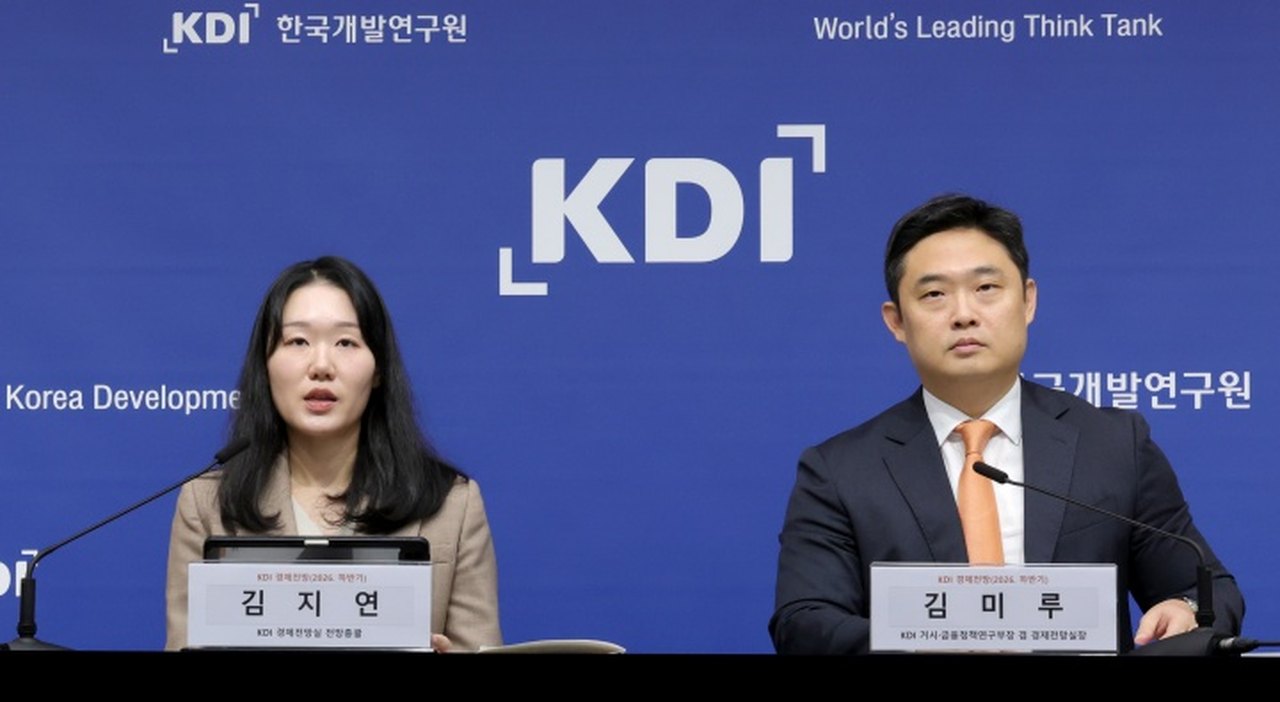
[DiaryPoint=Reporter Kim Jeong-hun] In its second-half economic outlook released on the 18th, the Korea Development Institute (KDI) projected South Korea’s economy would grow 3.8% this year and 3.9% in 2027. Compared with its August forecast, that is an increase of 0.6 percentage points from 3.2% for this year and 1.7 points from 2.2% for next year.
KDI expects exports and equipment investment in semiconductors and related products to rise as global investment in AI infrastructure continues. It forecasts export growth of 10.3% this year and 8.1% next year, while equipment investment is expected to increase 8.7% this year and 8.1% in 2027. According to KDI’s reported explanation, semiconductors and related investment and construction will account for about half of this year’s growth and roughly two-thirds of next year’s.
Faster growth does not necessarily mean household finances will improve right away. KDI said the income gains from the semiconductor boom have been limited, while high prices have kept private consumption from improving as quickly as the broader economy this year. It expects private consumption growth to rise from 1.8% this year to 2.4% next year, helped by stable international oil prices and higher incomes.
Inflation could slow the pace of recovery households feel. KDI expects consumer price inflation to ease from 2.7% this year to 2.4% next year, while core inflation, which excludes food and energy, is projected at 2.6% this year and 2.5% next year. The institute said price pressures could persist even if oil prices stabilize, as demand recovers.
Employment gains are forecast to widen from 120,000 this year to 200,000 next year, supported by improving conditions in manufacturing. KDI cautioned, however, that if the semiconductor sector’s gains remain concentrated in a few industries and income groups, the recovery in consumption may not be broadly shared. A slowdown in U.S. investment in AI data centers or energy supply disruptions stemming from the Middle East were cited as risks to the export and inflation outlook.