
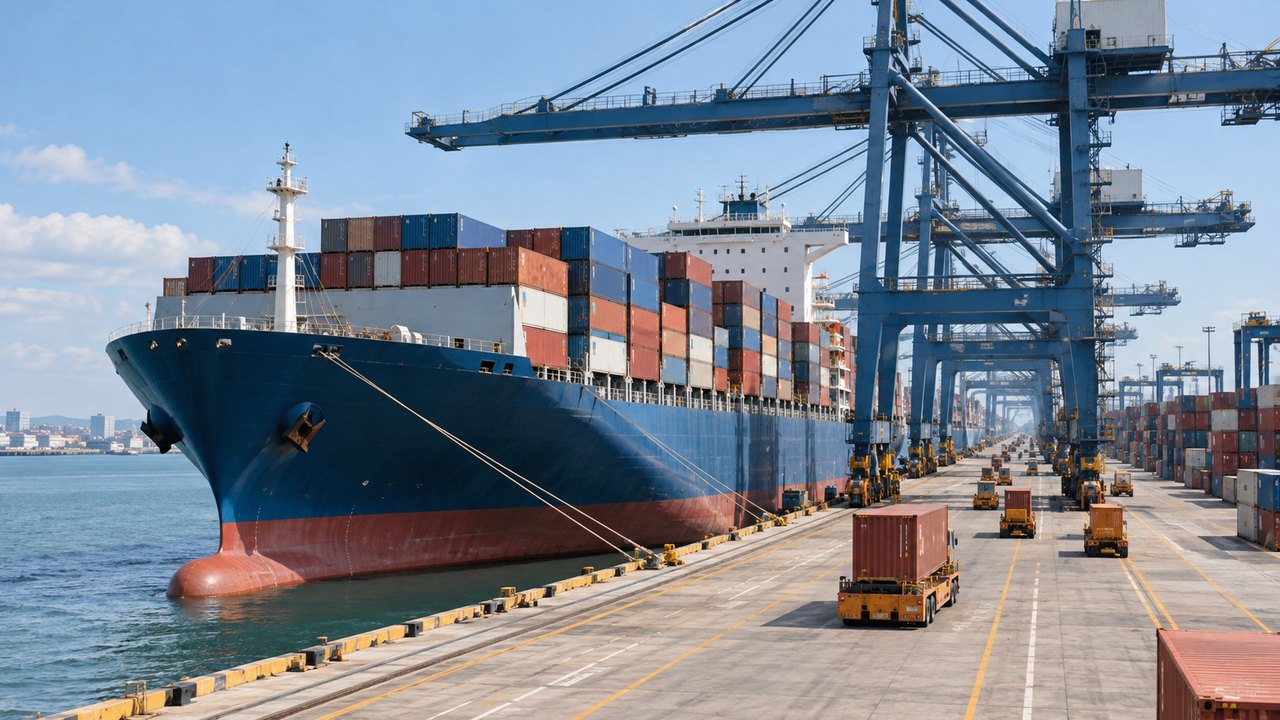
[Diary Point | Reporter Kim Jeong-hun] South Korea’s Ministry of Oceans and Fisheries has announced a maritime AI transformation strategy, aiming to rank first globally in orders for fully autonomous ships by 2035. The plan centers on developing International Maritime Organization (IMO) Level 4 technology for ships that operate without onboard crew, then testing it in real waters and ports.
An autonomous ship uses artificial intelligence to analyze information from sensors, navigation equipment and engine systems, then make and carry out navigational decisions. Level 4 is the fully unmanned stage, with no crew aboard and only minimal remote intervention. It does not mean that today’s commercial ships are about to switch directly to this level.
Core technologies targeted for 2032, followed by real-world trials
The Ministry of Oceans and Fisheries, working with the Ministry of Trade, Industry and Energy, plans to develop unmanned navigation, automated engine systems, operating technologies, certification and validation methods, and testing technologies by 2032. The government intends to connect its 2026–2032 fully autonomous ship technology program to international standard-setting and commercial deployment.
The government’s market goal is to rank first in orders in the global autonomous ship market by 2035. Policy Briefing Korea projects that the global market will be worth around $200 billion in 2035. This is a market forecast, not confirmed revenue or an estimate of orders won by South Korean companies.
Automated ports will help create real-world operating conditions
Commercial deployment requires changes on land as well as automation aboard ships. The government plans to build an automated port testbed at Gwangyang Port by 2029, test container loading and transfer equipment there, and then expand the work to major ports including Busan and Jinhae New Port.
At ports, the government will also develop a platform that uses AI to analyze work conditions and equipment movements and coordinate cargo-handling sequences and transfers. The plan includes upgrading Port-i, Busan Port’s integrated information platform, to connect data across maritime, port and inland logistics. If the targets are met, port productivity is projected to be 30% higher in 2035 than it is today.
Shore-based roles may grow before seafarer jobs decline
As autonomous operations expand, routine monitoring and control tasks performed aboard ships may decrease. At the same time, roles in shore-based remote operations, navigation data analysis, AI system validation, communications and cybersecurity, equipment maintenance, and safety certification are expected to become more important.
The strategy calls for improving maritime data and training specialists, but it does not specify hiring numbers by occupation or how current seafarers might transition to new roles. Based on the information available, it is more accurate to view this as a gradual reorganization involving shipbuilding, shipping, IT and port operations than to conclude that seafarer jobs will disappear across the board in the near term.
For logistics users, key changes would be shipping safety and port turnaround times. The ministry plans to use AI-based safety information to reduce deaths and injuries in maritime accidents by 30% by 2030, and to apply AI to early detection of supply chain risks and forecasts of seafood supply and demand. The timeline for nationwide commercial operation of Level 4 ships, as well as specific routes and fares, has not yet been set.
The announcement is a mid- to long-term plan that pairs its 2035 ambition with technology development by 2032, port trials by 2029, and investment in data and workforce training. The pace of commercial deployment will depend on results from trials in real waters, the development of international standards and the scale of industry participation.