
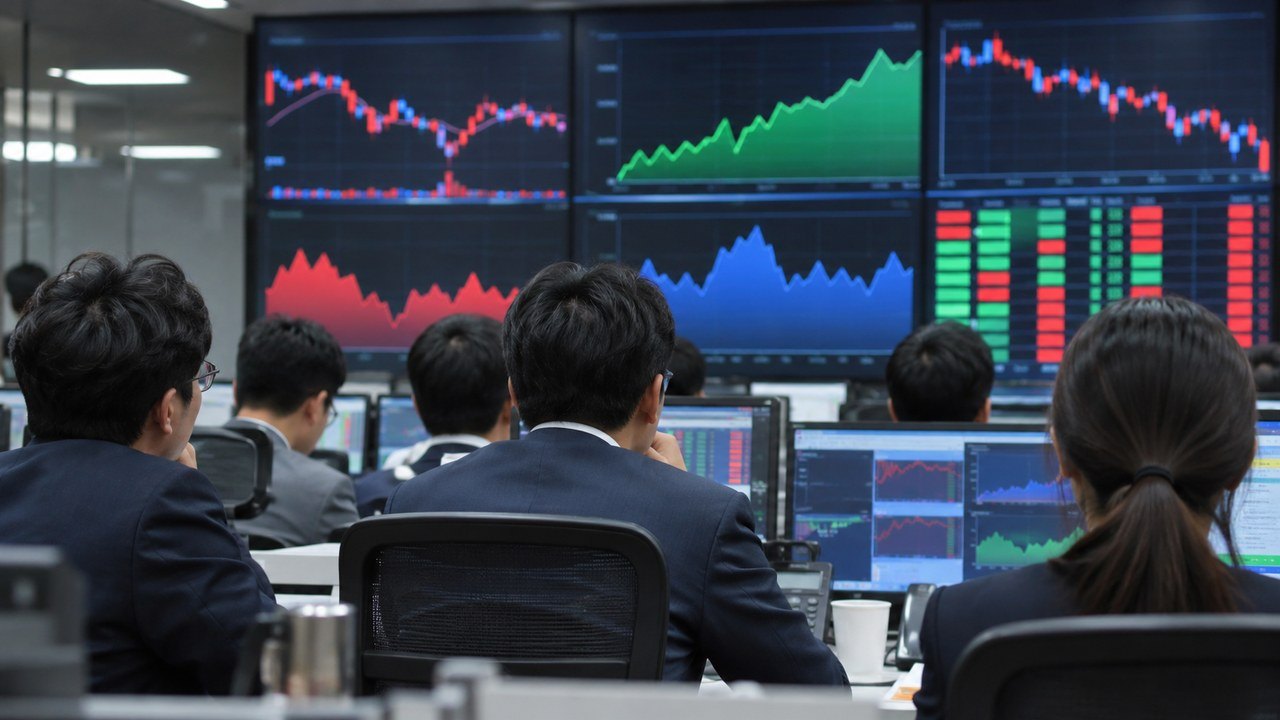
[DiaryPoint | Reporter Kim Jeong-hun] On the 4th, as Democrats appeared poised to regain control of both chambers of Congress in the U.S. midterm elections, the Kospi swung sharply before ending the day higher. According to Yonhap News, citing Korea Exchange data, the benchmark index closed at 5,683.80, up 35.01 points, or 0.62%, from the previous session. It rose 2.43% shortly after the open, then fell as low as 5,421.72 during the session.
The closing gain made the election's market impact look modest, but the intraday low was more than 4% below the previous close. The Associated Press also reported that the Kospi finished up 0.6%, while Samsung Electronics and SK Hynix fell 0.7% and 0.1%, respectively. The day's key takeaway: a rebound in the index did not mean chip stocks were gaining.
Congress can affect the pace and oversight of policy
If Democrats take the lead in Congress, they could step up hearings, investigations and legislative scrutiny of the Trump administration's policies. But the election result alone will not immediately change tariffs or AI regulations. Bills must pass both chambers and be signed by the president; overriding a veto requires a high threshold of support in Congress.
Tariffs, in particular, are not determined simply by a change in which party holds a congressional majority. The Congressional Research Service says Congress has authority over foreign commerce and tariffs, but has also delegated some tariff-adjustment powers to the president through legislation. To assess whether tariffs affecting South Korean companies will change, investors will need to watch how the administration uses its existing delegated authority and how Congress handles relevant laws and oversight.
AI rules could affect chip demand through data center investment
A Democratic-led Congress could intensify debate over data centers' power use and community impacts, as well as oversight of big tech companies. But no new regulation has been confirmed as passed or implemented. For South Korea's semiconductor sector, more immediate questions are whether regulatory debate affects investment and construction timelines, and whether major tech companies continue spending on AI infrastructure.
If investment in U.S. data centers slows, expectations for server memory and high-bandwidth memory demand could weaken. On the other hand, if AI services continue to spread and companies stick to their investment plans, it would be premature to conclude that a change in Congress alone will reduce chip demand. Samsung Electronics and SK Hynix both ended lower even as the broader index rose, underscoring how difficult it is to read the sector's direction from the election result alone.
Investors in South Korea should track tariff announcements, legislative progress, data center investment plans and memory demand forecasts separately. The Kospi recovered from its sharp intraday drop on the 4th, but the emerging election results have not yet translated into settled policy. Markets are likely to watch the new Congress's actual legislative and hearing schedule, along with signals from companies about AI investment.