
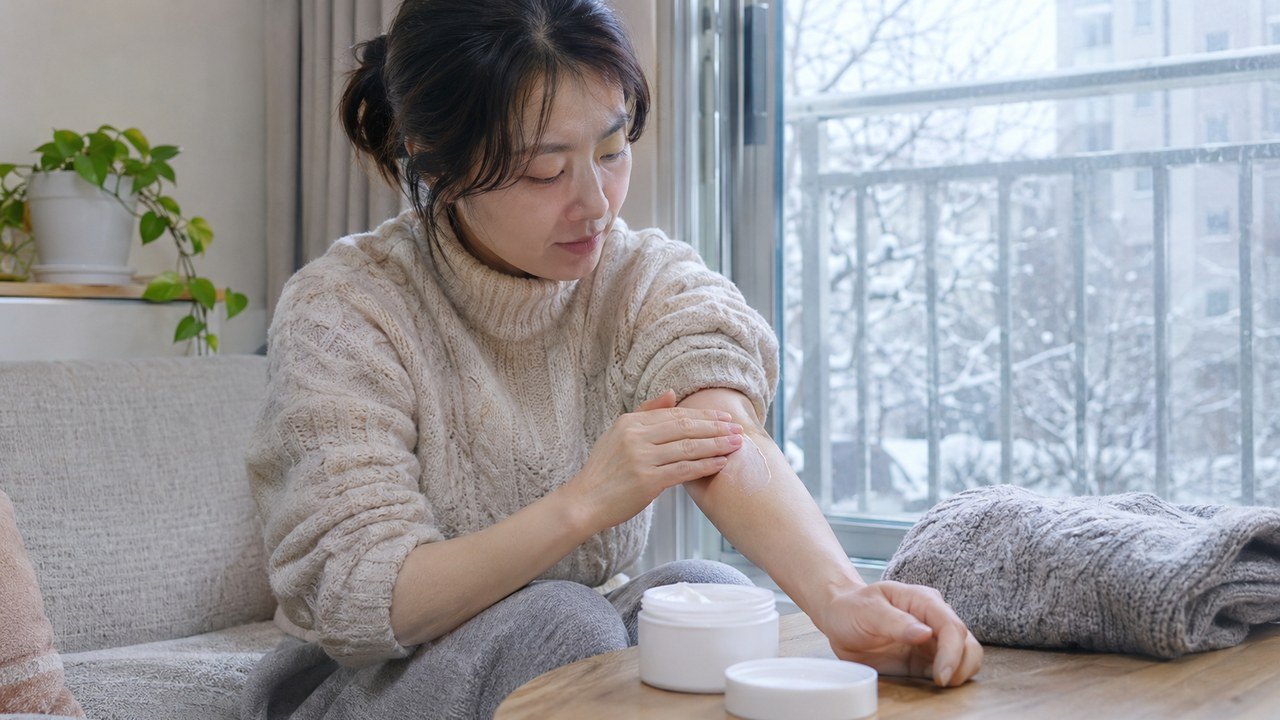
If your arms and legs become narrow and white every winter, you may have skin conditioning symptoms.Cold weather and heating will reduce skin moisture, and with age, skin moisture and natural moisture factors will decrease.
The Seoul Assan Hospital explains that skin conditioning can spread to the arms and body, starting from the thighs and legs, etc. When the skin breaks, it becomes hot or sticky, and scratching can cause inflammation and worsen the symptoms.
Hot water and frequent cleaning weaken skin walls.
When the temperature drops, the function of the sweat glands and glands decreases, and the protective membranes on the skin surface weaken and the moisture evaporates easily. Long-term washing with hot water or using a lot of soap and occasional habits can also damage the skin’s protective oily membranes and corneal layers.
When washing, take a short shower with unwashed water instead of hot water, and use the detergent gently on the necessary areas. When rubbing the skin with a towel or scratching the itchy areas is better to avoid.
Shower within 3 minutes.
After the shower, apply enough moisturizers before the skin dries out. The Seoul Asan Hospital instructs you to apply moisturizers within 3 minutes after washing, and explains that it is important to consistently use products that are less irritable and maintain moisture. In the dry season, cream formulations can be more beneficial for moisture maintenance than lotions.
If you choose a soft side material, it will help to reduce irritation so that the room does not get too dry, and if you choose clothes that touch the skin, it will help to reduce irritation. Strong soap and moisturizers can also stimulate itching, which will stop when it becomes dull or red after use.
If itching lasts long or occurs in the entire body, treatment is needed.
If it is not healed or repeated, and it is severe enough to interfere with sleep or daily life, it should be treated with skin care, even if it appears with skin rashes or swelling or it is itching throughout the body, it is necessary to determine the cause.
In addition to skin problems, itching can also be associated with skin diseases such as swelling or other health problems.This article does not replace diagnosis or treatment and should be treated by a medical professional if the symptoms persist.