
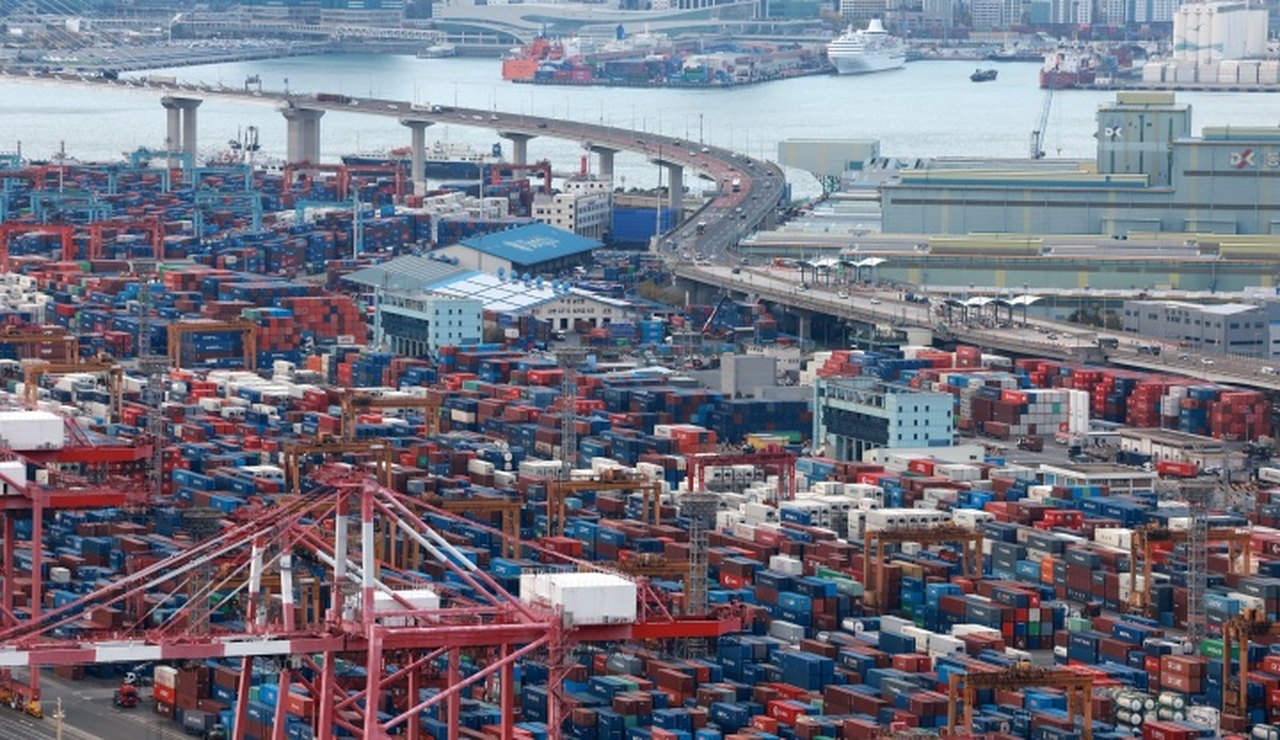
[DiaryPoint = Reporter Kim Jeong-hun] South Korea’s cumulative exports for the year passed $1 trillion at 2:09:38 p.m. on Nov. 19. It is the world’s fourth such milestone, after Germany, the United States and China. The total has grown 10,000-fold in the 62 years since South Korea first reached $100 million in exports in 1964.
Expanding investment in AI data centers was a major driver of growth. In the Ministry of Trade, Industry and Energy’s October trade figures, semiconductor exports reached $56.4 billion, up 259.4% from a year earlier. Computer exports rose 497% to $5.9 billion, while exports of products other than semiconductors also increased 34%.
Consumer goods broadened the export base as well. Cosmetics exports in October climbed 57.5% to $1.44 billion, and agricultural, fishery and food exports rose 11.6% to $1.11 billion. Demand for cosmetics grew in Latin America as well as North America and Europe; ramen, beverages and sauces led food exports. Eighteen of the country’s 20 major export categories posted gains.
Higher exports can create more work and income across related industries, including production, transportation and parts supply. The Korea International Trade Association estimates that exports will generate employment for 4.95 million people this year. That figure represents employment supported across export-related industries; it does not mean 4.95 million people were newly hired or that each household will receive a job.
Passing $1 trillion in exports will not by itself lower grocery bills or raise household incomes. The export figure is the total value of goods sold overseas, while the cost of everyday living depends on many factors, including oil prices, exchange rates and domestic distribution costs. The Bank of Korea has said strong exports and investment can support growth, but how quickly those gains reach wages, employment and consumer spending varies by industry and company.
South Korea’s export mix and markets have broadened, but swings in semiconductor and petroleum product prices, rising protectionism and oversupply remain risks. Kim Jung-kwan, the minister of trade, industry and energy, said the government would work “to ensure the benefits of strong exports help revitalize regional economies and create jobs for young people, so that everyone can feel the gains.”