
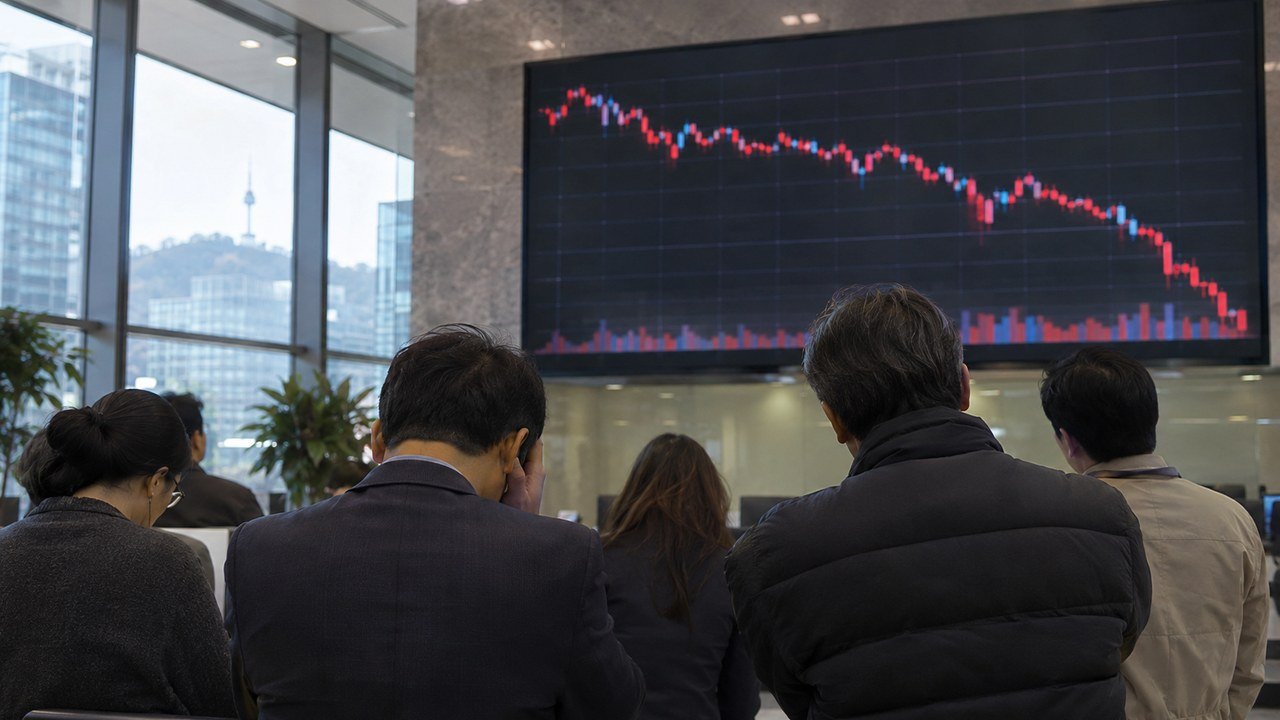
[DiaryPoint reporter Kim Jeong-hun] The KOSPI closed at 4,869.96 on Nov. 20, down 267.93 points, or 5.21%, from the previous session. Samsung Electronics fell 7.01% to 183,100 won, while SK hynix dropped 5.92% to 1,113,000 won.
On the main board, foreign investors were net sellers of 1.1411 trillion won and institutions sold a net 951.3 billion won. Individual investors were net buyers of 1.595 trillion won, taking up shares sold by foreign and institutional investors. By a simple calculation of holdings' market value, a 1 million won position in Samsung Electronics lost about 71,000 won in a day, while the same amount invested in SK hynix lost about 59,200 won.
The declines extended beyond South Korean chipmakers. Overnight, the Nasdaq fell 2.3% and the Philadelphia Semiconductor Index lost 2.41%. Selling in tech stocks also spread across Asia, with Japan's Nikkei 225 down 5.1%. Concerns about returns on AI investment and uncertainty surrounding the semiconductor industry were cited as factors behind the global tech sell-off.
Kang Jin-hyeok, a senior researcher at Shinhan Securities, said the KOSPI had slipped back below the 5,000 mark amid “regulatory noise around AMD and a concentration of investment flows in Anthropic.” He pointed to weakness in major U.S. tech companies and allegations that AMD violated Chinese export controls, adding that “foreign investors have been pulling out for six consecutive trading sessions.”
As stocks plunged, sell-sidecar measures were triggered in the KOSPI and KOSDAQ markets at 11:54 a.m. and 1:28 p.m., respectively. A sidecar temporarily suspends the effect of program sell orders for five minutes. The KOSPI hit an intraday low of 4,831.69 before trimming some losses, while the KOSDAQ closed down 5.71% at 645.68.
For individual investors, the sharp drop made it especially important to check how each holding performed and what share of a portfolio it represents. Even as the KOSPI fell by more than 5%, losses varied by stock, and declines in heavily weighted semiconductor shares such as Samsung Electronics and SK hynix added to the pressure on the index. The sell-sidecar measures briefly halted volatile program trading during the session but did not reverse the losses by the close.