
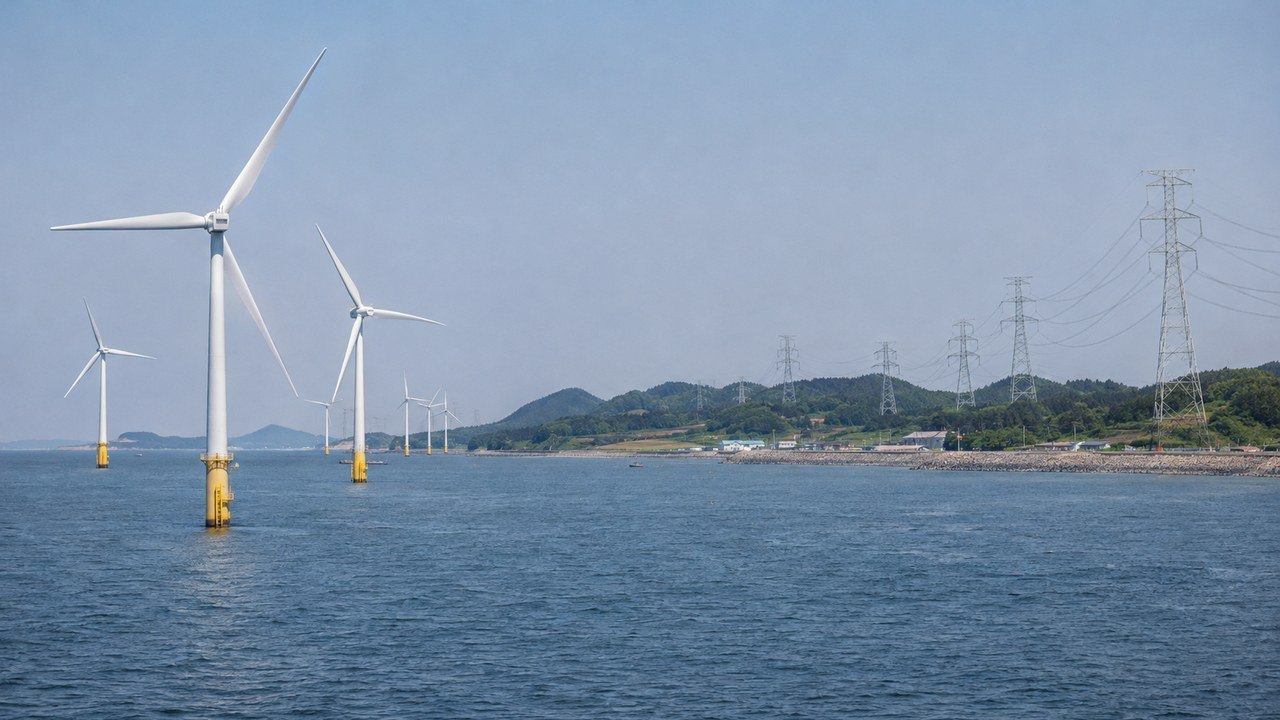
[DiaryPoint = Reporter Kim Jeong-hun] In its World Energy Outlook 2026, released on November 19, the International Energy Agency (IEA) said South Korea, alongside Japan, has one of the world’s highest levels of energy import dependence. The government introduced the report the following day, saying that its plan to install 100 GW of renewable energy capacity by 2030 could reduce both import dependence and carbon emissions.
According to the government’s energy information platform, which draws on statistics from the Korea Energy Economics Institute, South Korea’s energy import dependence stood at a provisional 93.7% in 2024. The figure is the share of energy used in the country that comes from abroad. The IEA’s 2025 review of South Korea’s energy policies also noted that most of the country’s energy supply comes from fossil fuels and that the bulk of those fuels are imported.
This dependence reflects South Korea’s limited domestic production of oil, gas and coal. Because fuels such as crude oil and natural gas are exposed to global market prices and shipping routes, supply disruptions can drive up import costs and energy expenses for industry. The IEA estimated that, before supply disruptions in the Strait of Hormuz in 2026, 80% of crude oil and 90% of liquefied natural gas (LNG) were headed to Asia.
100 GW refers to maximum generating capacity, not electricity output
The government’s target of 100 GW of renewable energy by 2030 is a capacity goal for facilities such as solar and wind power. A gigawatt (GW) measures the maximum amount of electricity a power plant can generate at a given moment; actual annual output depends on the weather and operating hours. If the target is met, more facilities will convert domestic sunlight and wind into electricity, replacing some power generation that relies on imported fuels.
Under its Stated Policies Scenario (STEPS), the IEA projects that energy-related CO₂ emissions in the group comprising South Korea and Japan will fall by about 30% over the next decade. The agency cited factors including a decline in coal-fired power generation. This is a scenario-based projection that reflects each country’s policies, not an estimate of the impact of the 100 GW renewables target alone. The IEA said implementing South Korea’s 2030 renewable energy plan could help lower both import dependence and emissions.
Expanding the grid and storing surplus power will be essential
Solar and wind output varies with sunlight and wind conditions, so adding generation facilities alone cannot guarantee a stable electricity supply. South Korea will also need transmission lines to carry electricity from areas with abundant generation to areas with high demand, grid operations that can adjust power flows in real time, and energy storage systems (ESS) and pumped-storage hydropower to store surplus electricity for later use.
In a September grid modernization plan, the Ministry of Climate, Energy and Environment said it would reinforce transmission and distribution networks to accommodate more than 100 GW of renewable capacity by 2030, while making better use of existing lines and improving grid connection procedures. The Honam region was identified as an area where bottlenecks in transmission and distribution could delay connections for new projects. The plan calls for prioritizing grid access for developers whose projects are ready. The IEA’s recommendations to accelerate offshore wind and expand transmission lines, ESS and pumped-storage hydropower are also closely tied to the grid’s capacity to absorb renewable power.
In the same report, the IEA said global electricity demand has grown by an average of 3.3% a year since 2019, outpacing growth in total energy demand. Wider adoption of electric vehicles and electrification in industry could ease reliance on imported oil and gas, but renewable generation will be harder to use fully if the grid cannot keep pace. The practical impact of the 100 GW target will depend on how quickly South Korea builds the infrastructure to transmit and store electricity alongside the generation capacity.